






A Complete Identification Guide for Carolina Homeowners
Fleas are one of the most common pest problems for pet owners in North Carolina and South Carolina. These insects are tiny, fast-moving, and capable of multiplying quickly, which makes early identification essential. If you have ever wondered what fleas look like or how to tell if they are in your home, this guide from Clark’s Termite & Pest Control will help you understand what to look for and how to protect your home.
What Are Fleas?
Fleas are small parasitic insects that survive by feeding on the blood of mammals and birds. There are more than 2,500 species worldwide, and many thrive in warm, humid regions like North Carolina and South Carolina. Fleas are known for their impressive jumping ability, often leaping more than 150 times their body length. This ability helps them move easily between pets, wildlife, and people.
Fleas move through four stages: egg, larva, pupa, and adult. Under ideal conditions, they can complete their life cycle in about three weeks. Fleas can also delay development until temperatures and humidity levels favor survival. A single female flea can lay 20 to 50 eggs each day, which is why flea infestations grow so quickly.
What Do Fleas Look Like?
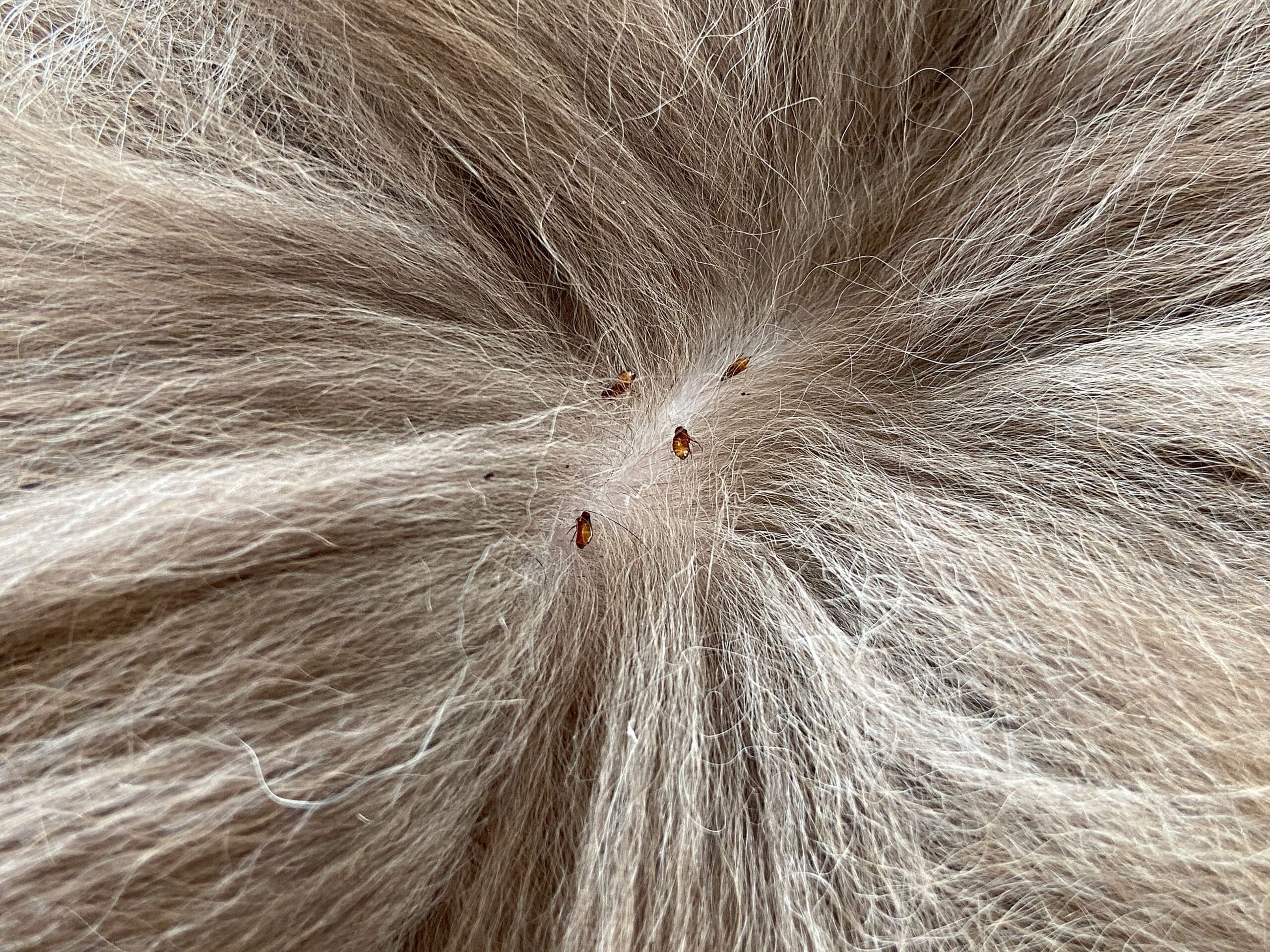
Fleas are often first noticed as tiny specks that seem to jump from place to place. When you look closely at a pet or even at carpeting, you may spot a small dark insect moving quickly through the fur or fibers.
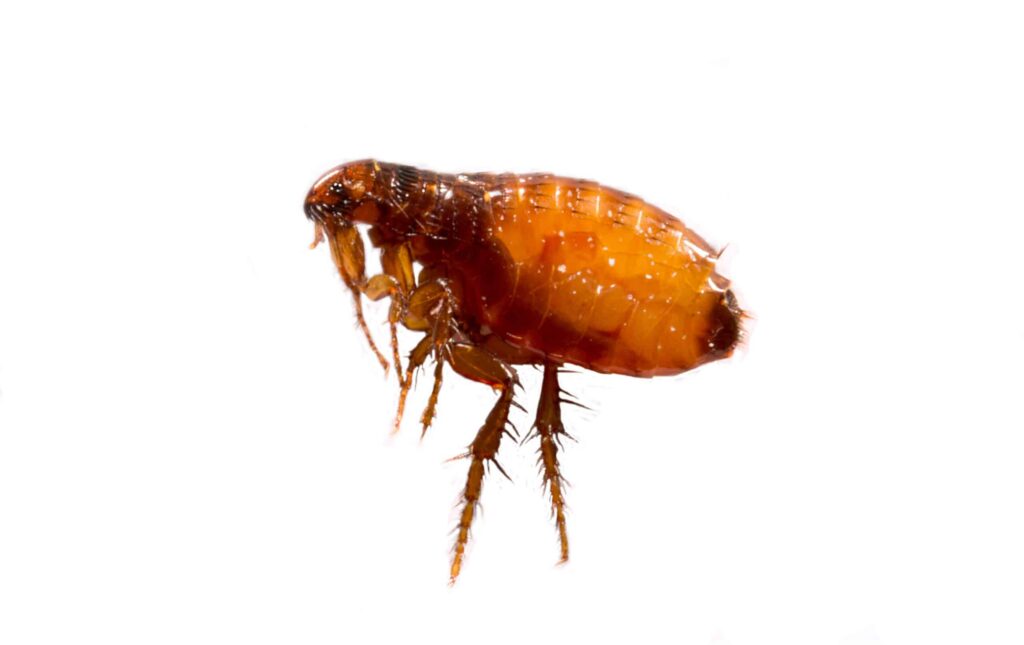
Here are the key features of an adult flea:
- Size is about 3 millimeters or one eighth of an inch
- Color is usually dark brown or reddish brown
- Body is oval-shaped and flattened, which helps them move through fur
- They have six legs with powerful hind legs used for jumping
- They move quickly and often appear as tiny specks that hop when disturbed
The early stages of the flea life cycle are too small to see with the naked eye. Eggs, larvae, and pupae are tiny and often hidden in carpet fibers, bedding, or cracks along baseboards. Many flea infestations are detected when pets begin scratching more than usual or when people notice small red bites around their ankles.
How Fleas Get Into Homes in the Carolinas
Fleas can enter any home in North Carolina or South Carolina. Common sources include:
- Pets that pick-up fleas while outdoors
- Wildlife activity such as raccoons, opossums, squirrels, and mice
- People who spend time in wooded or grassy areas
- Fleas living in shaded, moist areas of the yard
Once inside, fleas spread quickly. Eggs fall from pets into carpets, furniture, pet bedding, and other soft surfaces where the next generation develops.
Why Fleas Are a Problem in Your Home
Flea bites cause itching and irritation for both pets and people, but the health concerns go far beyond discomfort. Fleas can:
- Trigger allergic reactions in dogs and cats
- Spread bacteria such as Bartonella henselae, which is linked to cat scratch fever if subsequently transmitted to a person
- Multiply rapidly and become difficult to control without treatment
Fleas do not damage your home’s structure, but they do pose serious health risks for your family and pets.
How to Prevent Fleas in Your Home
1. Protect Your Pets
Regular flea prevention prescribed by a veterinarian is the most important step. Because fleas develop in stages, pets usually need ongoing treatments to fully break the flea life cycle.
2. Clean Indoor Areas Regularly
Vacuum carpets and rugs, wash bedding frequently, and clean areas where pets rest. Severe infestations often require professional treatment.
3. Maintain Your Yard
Keep grass trimmed, remove yard debris, and reduce shaded, moist areas that attract fleas.
4. Limit Wildlife Activity
Secure trash cans, remove outdoor food sources, and block entry points that allow wildlife near your home.
Professional Flea Control in the Carolinas
Since fleas are small, fast-breeding, and capable of hiding in multiple areas of a home, many infestations require professional pest control. Clark’s Termite & Pest Control uses Integrated Pest Management to target fleas at every life stage while keeping your family and pets safe.
Our technicians identify the source of the infestation, treat indoor and outdoor areas, and provide guidance to help prevent fleas from returning.
If you believe you have a flea problem, acting quickly is the best way to protect your home.
Contact Clark’s Termite & Pest Control at 866-781-4991 for expert flea identification and flea control services in North Carolina and South Carolina.