




Home Termite Control in North Carolina & South Carolina

Home » Pest Library » Termite Control » Home Termite Control in North Carolina & South Carolina
- Termites
- Termite Control & Prevention
- Termite Inspections
- Home Termite Control
For more information regarding termites, visit the following pages:
- 24/7 termite damage protection
- $1 million damage repair warranty
Many homeowners don’t realize that termite damage to their property is not covered by their homeowners’ insurance policy, resulting in an estimated $1.5 billion in damages each year. In the southeast, one acre of land can contain up to 14 termite colonies! A proper termite protection plan is vital for protecting your home from an unwanted, often unseen termite infestation.
At Anticimex Carolinas, we take termite protection very seriously. With an estimated 5 million homes affected by termites every year in the US, it’s our job to make sure you’re not one of them.
Along with our comprehensive termite treatment services, we offer:
Get a Free Pest Control Quote
What Causes Termites?
Termites are drawn to a property by three main factors: consistent moisture, direct wood-to-soil contact, and proximity to an existing colony in the surrounding soil. None of these factors creates termites out of nothing, but they determine whether termites already living in the soil nearby find your property an easy place to feed and nest.
How Termites Enter a Home
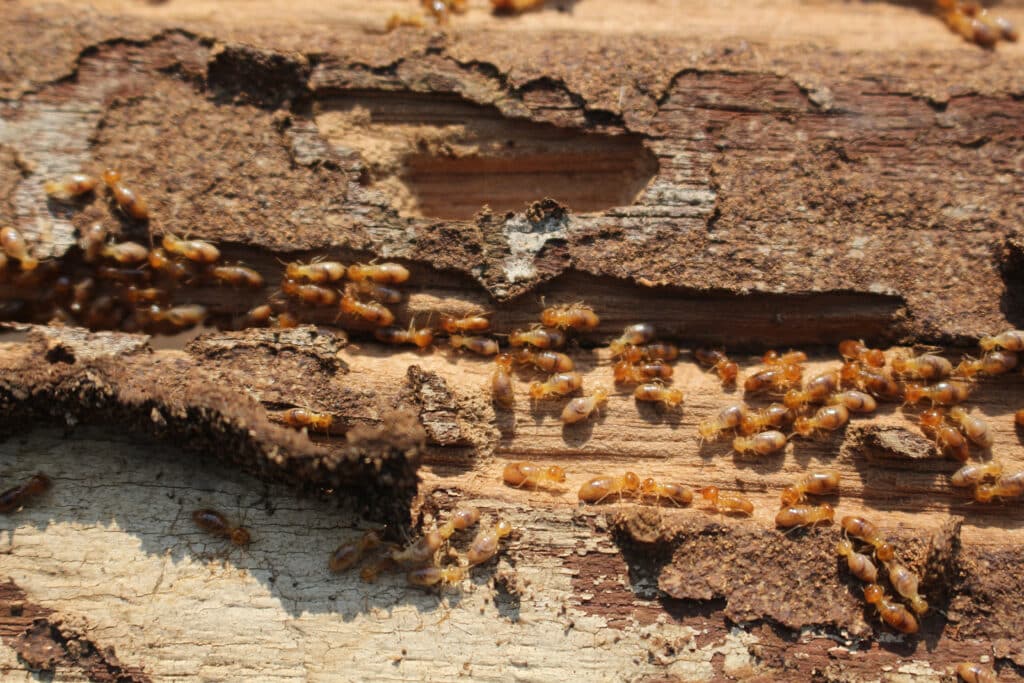
Subterranean termites, which account for most termite activity in North Carolina and South Carolina, typically live in the soil. They can enter structures through wood-to-soil contact, foundation cracks, expansion joints, plumbing and utility penetrations, or shelter tubes built across foundation surfaces.
Wood-to-Soil Contact
Examples include door frames, deck posts, porch steps, and siding that extends down to or below grade, all of which give termites a direct bridge into the structure.
Plumbing & Utility Penetrations
Pipes, conduits, and other utility lines that pass through a foundation wall or slab create small gaps that termites can exploit, which is part of why bathrooms and kitchens see disproportionate termite activity for their size.
Firewood, Mulch, & Lumber
Any wood-based material stacked directly against an exterior wall provides termites with both a food source and a path into the structure.
Foundation Cracks
Examples include door frames, deck posts, porch steps, and siding that extends down to or below grade, all of which give termites a direct bridge into the structure.
Introduced Infestations
Less commonly, termites arrive already inside a piece of furniture, an antique, or lumber used during a renovation, bypassing the soil connection entirely. This is more typical of drywood termites than the subterranean termite species dominant in North Carolina and South Carolina.
How to Check Your Home for Termites
Termites do not spread evenly through a house. They stay close to moisture, follow the wood framing, and avoid open light and air. Certain areas of a home consistently see more activity than others.
Attic
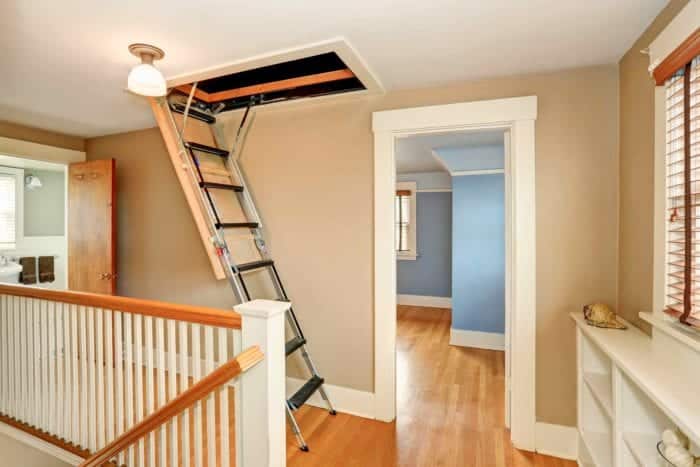
Attic termite activity is less common than activity near the foundation or crawl space. Swarmers may enter through vents or openings without establishing an infestation. Actual termite activity in upper portions of a structure can be associated with moisture conditions and, in parts of South Carolina, Formosan subterranean termites, which are more capable of establishing above-ground nests.

Yard & Exterior
Check tree stumps, fence posts, landscaping, any wood stored against the house, and mulch beds against the foundation, especially if they are over 3 inches deep. It is also important to check deck posts and steps where wood contacts or is close to soil.
Basement & Crawl Space
This is where most subterranean termite activity in this region begins. Sill plates, floor joists, support posts, and any exposed wood framing near the foundation are all within easy reach of a colony traveling up from the soil. Crawl spaces in particular combine wood framing, ground contact, and limited airflow, conditions that termites favor.

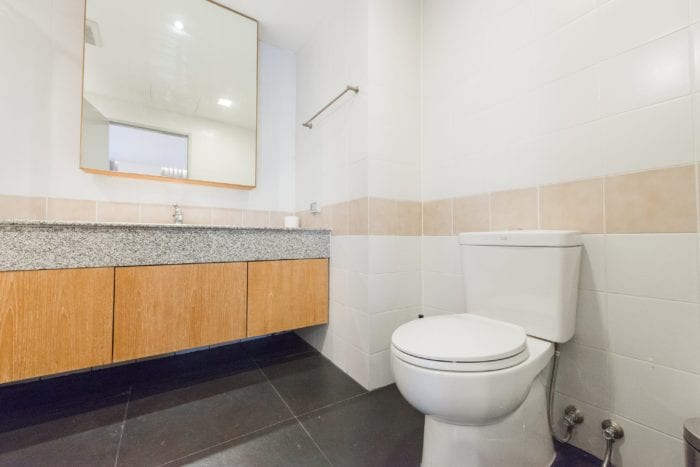
Kitchen & Bathrooms
Plumbing penetrations, cabinet bases near water lines, and the consistent moisture from daily use make kitchens and bathrooms more vulnerable than their square footage would suggest. Termites are drawn to the combination of accessible wood framing and reliable moisture in these rooms.
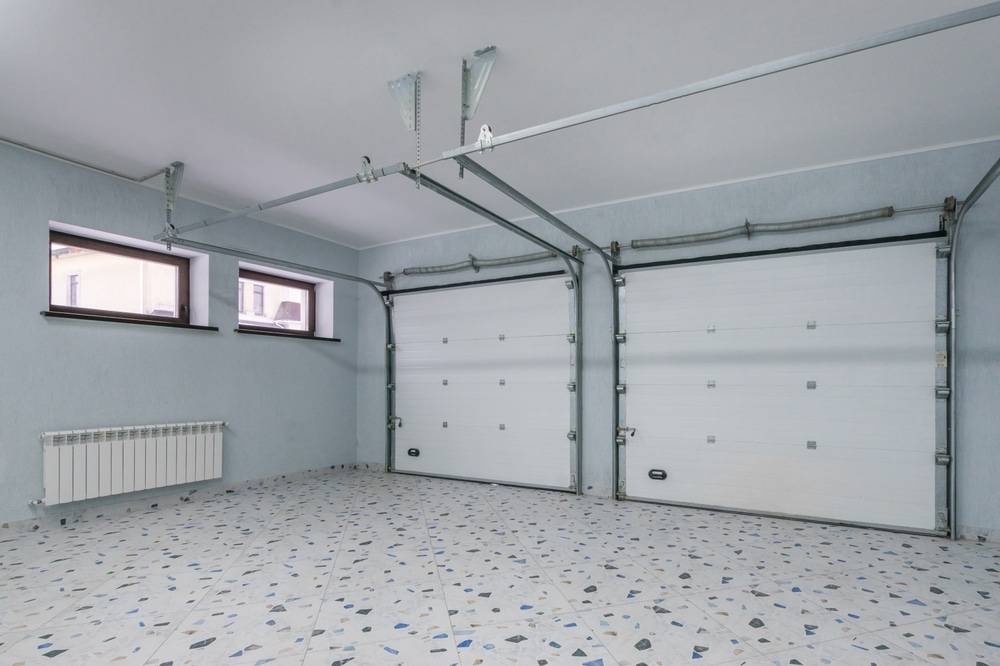
Garage
Where a concrete slab meets wood framing is a common transition point, and garages often have this exact junction, along with stored wood, cardboard, or paper products that give termites an easy food source close to the structure.
Living Areas, Walls, & Windows
Once termites gain entry to the structure, they travel through wall cavities and can reach baseboards, door frames, and window trim throughout the home, not just on the ground floor. Interior walls near plumbing or on exterior-facing walls tend to see activity first.
Signs of Termites
Termites are called silent destroyers for a reason. They can feed on the structural wood of your home for months or even years before you notice a single sign of activity. By the time damage becomes visible, termite repair costs can easily reach into the thousands.
The good news is that termites do leave clues. Knowing what to look for can help you catch an infestation early and protect your home before serious damage occurs.
Mud Tubes
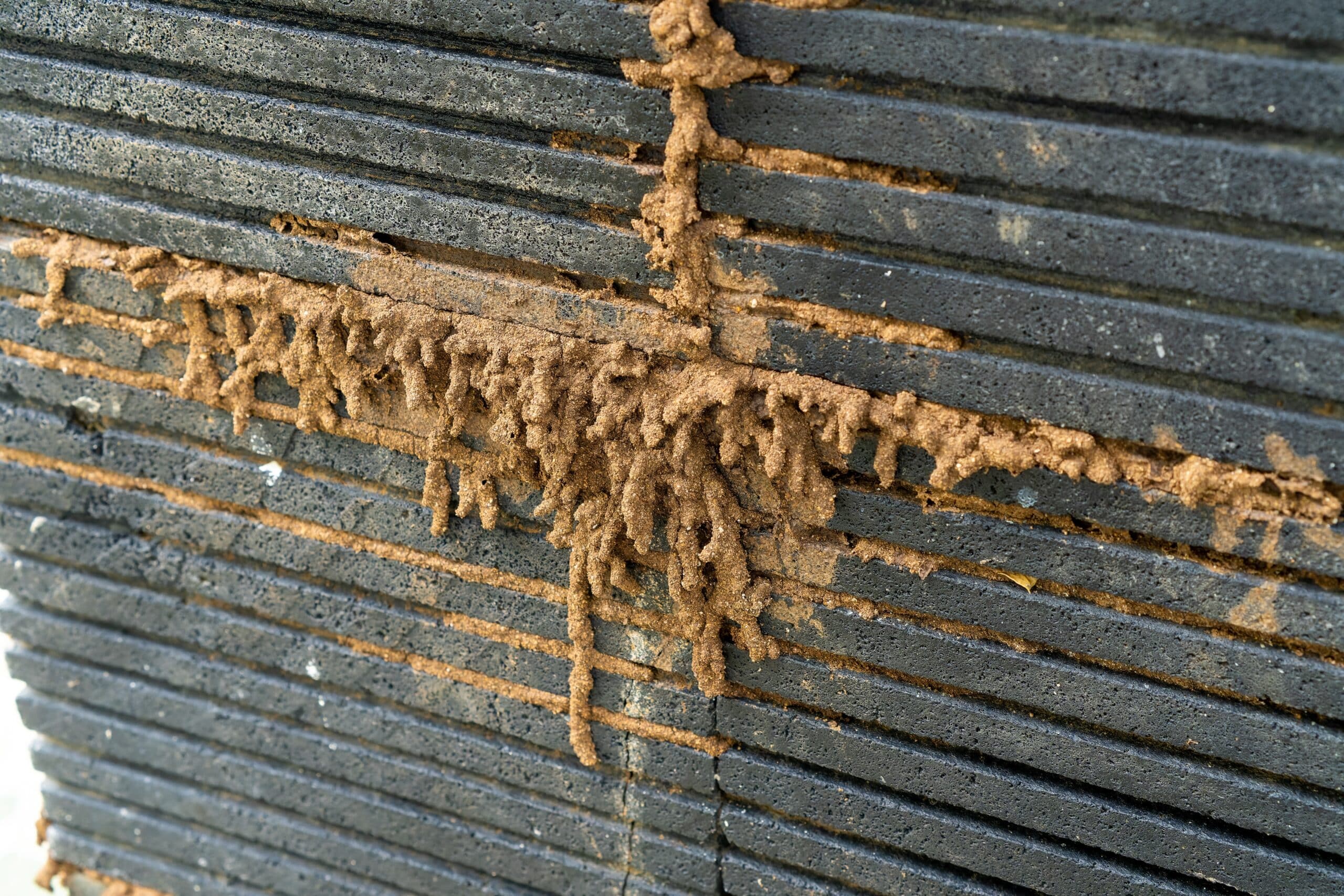
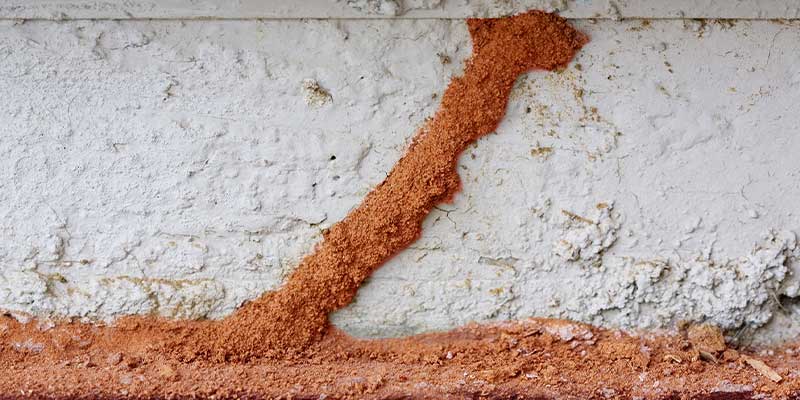
Termite mud tubes are one of the most recognizable signs of a termite problem. These pencil-width tunnels are built by subterranean termites to travel safely between their underground colony and the wood they feed on. The tubes are made from a mixture of soil, wood particles, and saliva that protects the termites from the open air and dehydration.
You will most commonly find mud tubes along foundation walls, in crawl spaces, on basement walls, around plumbing penetrations, and along exterior siding near ground level. In more advanced infestations, mud tubes may appear on interior walls or hang from ceiling beams and floor joists.
If you spot a mud tube, try breaking a small section open. If live termites are visible inside, the tube is active. If the tube is empty, the colony may have moved to a different area of the structure. Either way, the presence of mud tubes warrants a professional inspection because termites rarely travel far from their food source.
Droppings & Frass
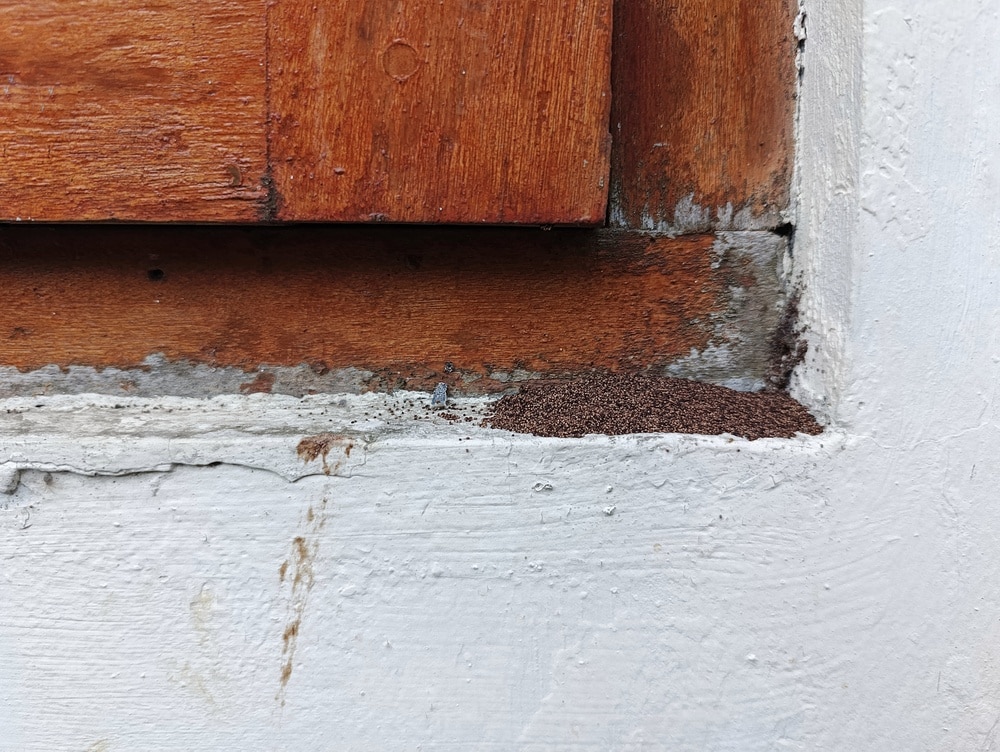
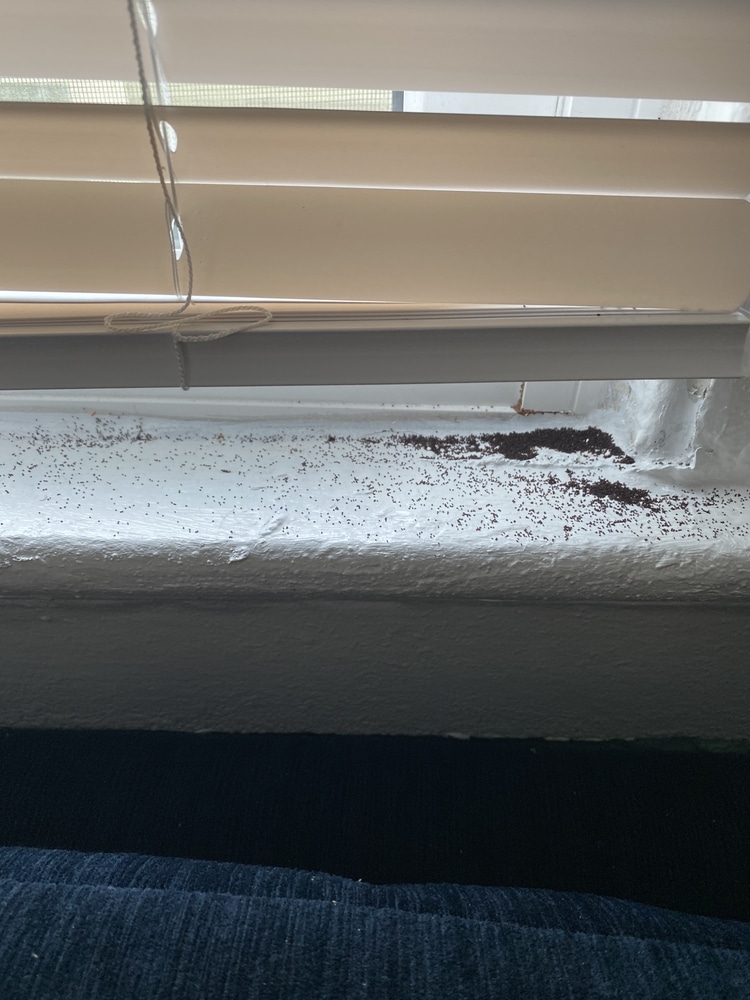
Termite droppings, also called frass, are a telltale sign of termite activity. As drywood termites consume wood from the inside, they push their fecal pellets out through small holes called kick-out holes. These pellets collect in small piles that are often mistaken for sawdust or ground pepper.
Termite frass pellets are tiny, oval-shaped, and typically have six concave sides. They range in color from light tan to dark brown, depending on the type of wood being consumed. You are most likely to find frass on window sills, along baseboards, beneath wooden furniture, near door frames, and on the floor beneath any wooden structure.
Subterranean termites handle their waste differently. Rather than expelling pellets, they use their droppings as part of the material in their mud tubes. So if you are finding small granular piles near wood surfaces, you are likely dealing with drywood termites.
Termite droppings vs. carpenter ant droppings: Carpenter ants produce frass that includes wood shavings mixed with insect body parts. Termite frass consists only of the uniform, pellet-shaped droppings without any debris mixed in. If you are unsure which pest is responsible, a professional termite inspection can confirm the species and determine the best course of action.
Damaged & Hollow Wood
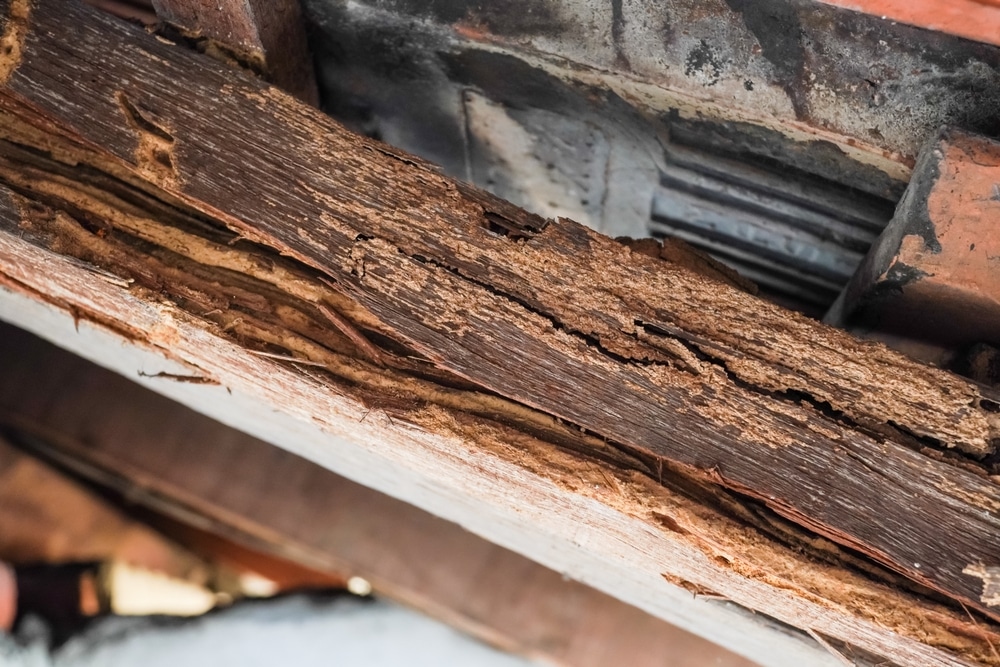
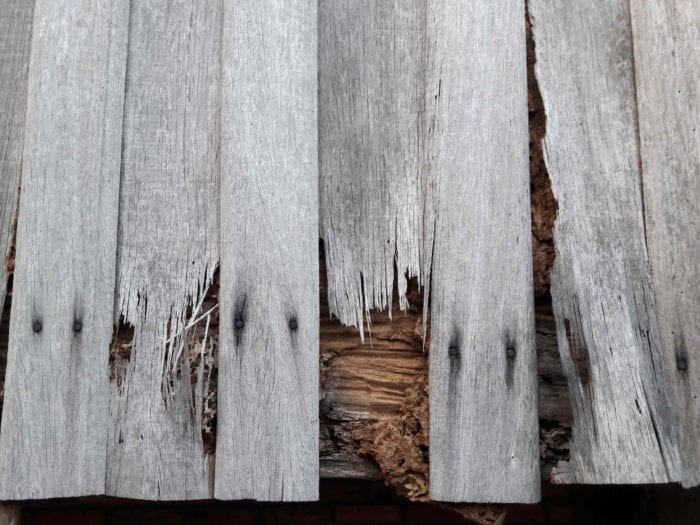
Termites eat wood from the inside out, which means a beam, door frame, or baseboard can look perfectly normal on the surface while being almost entirely hollow inside. Tapping on wood that sounds hollow or papery is a classic sign of termite damage.
Other visual indicators include blistering or darkened areas on wood surfaces, paint that appears uneven or bubbly, and wood that crumbles easily when you probe it with a screwdriver or sharp tool. In severe cases, you may notice that floors feel spongy underfoot or that door and window frames no longer close properly because the structural wood behind them has been compromised.
This type of hidden damage is exactly why termite problems can go undetected for so long. Termites tend to leave the outermost layer of wood, paint, or varnish intact, which is why the damage often resembles water damage at first glance. Making matters worse, most homeowner insurance policies do not cover termite damage, so catching the problem early can save you thousands in out-of-pocket repair costs. If you notice any of these signs, do not wait to get a professional assessment. You can learn more about what termite damage looks like and the risks it poses to your home in our full termite damage guide.
Discarded Wings on Windowsills
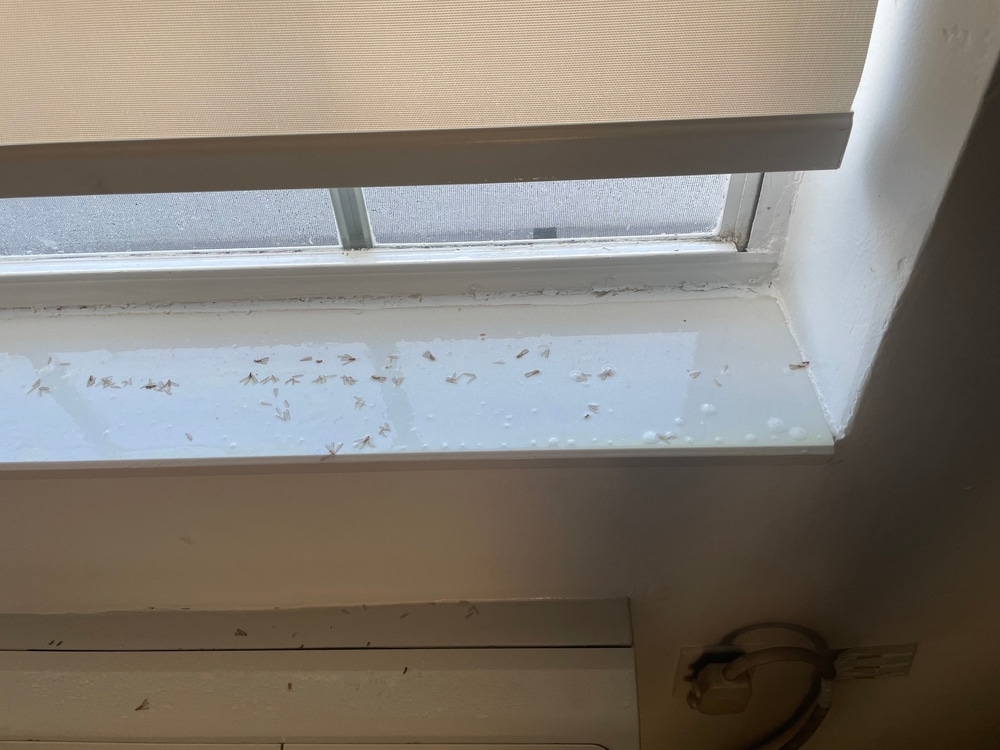
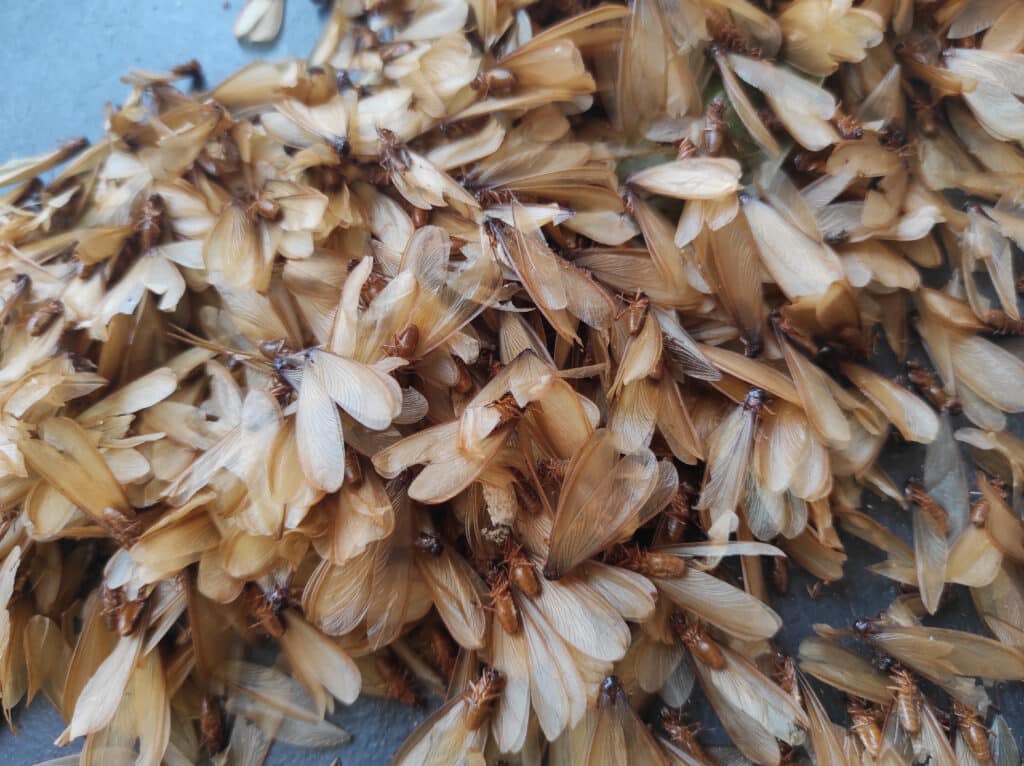
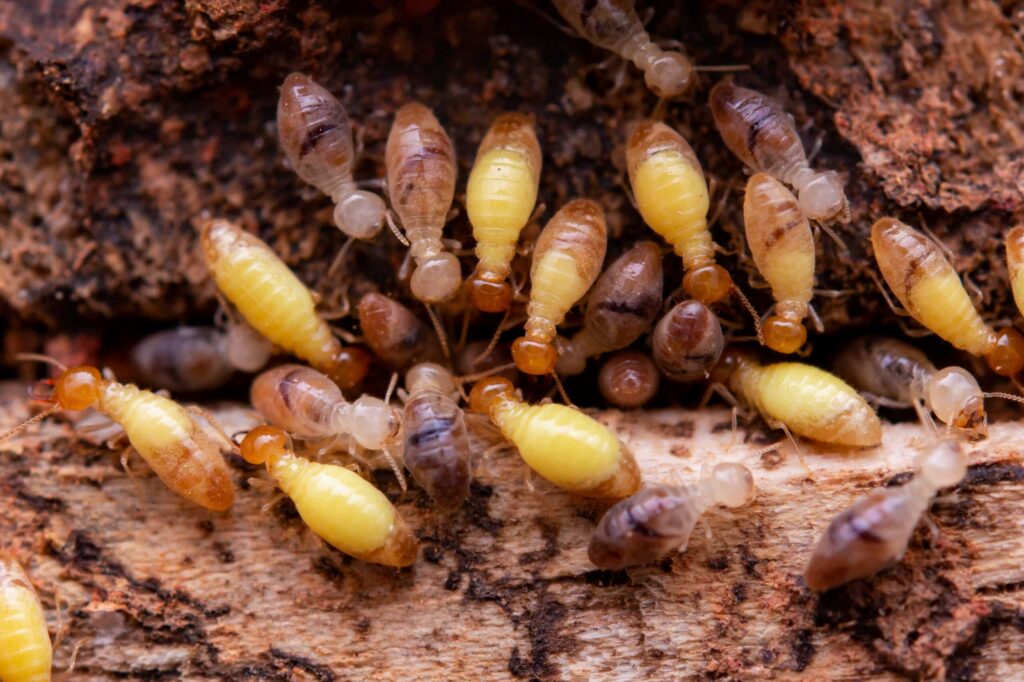
Finding winged termites inside your home, or discovering small piles of discarded wings near windowsills, doors, or light fixtures, is one of the most visible signs of an active termite colony. These winged termites, called swarmers or alates, are the reproductive members of a mature colony. They emerge in large numbers during spring and early summer to mate and establish new colonies.
Swarming time varies by species and weather. In North Carolina, subterranean termite species can swarm from early spring into early summer and again early fall. In South Carolina, native subterranean termites commonly swarm similarly to those in North Carolina, while Formosan termites often swarm from mid-May through July.
It is common to confuse termite swarmers with flying ants. The key differences are straightforward: termite swarmers have straight antennae, a broad waist, and two pairs of wings that are equal in size and longer than their body. Flying ants have elbowed antennae, a pinched waist, and two pairs of wings, with the front pair noticeably larger than the back pair. If you are finding discarded wings that are all the same size, they most likely came from termites.
Wall Clicking Sounds
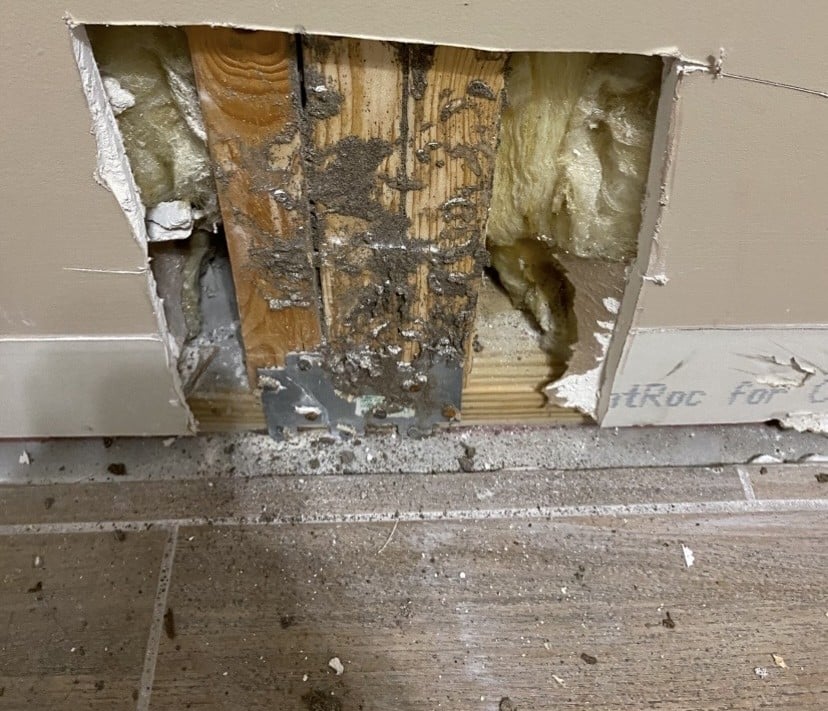
Termites are often called silent destroyers, but they are not completely silent. If you listen carefully in a quiet room, especially at night, you may hear faint clicking or rattling sounds coming from inside your walls. This noise is caused by soldier termites banging their heads against the walls of their tunnels to warn the rest of the colony when they sense a disturbance. You can sometimes trigger this response by tapping on a wall or piece of trim where you suspect activity.
Worker termites are also noisy eaters. As they chew through wood fibers, they produce a soft rustling or papery sound that can be heard through drywall or thin wood panels when the house is quiet. During spring swarming season, you may also notice a faint buzzing as winged termites move around inside wall cavities before finding their way out.
Termites can produce vibrations and tapping signals as part of alarm behavior, and faint sounds may occasionally be detected in a quiet structure. Sound alone, however, cannot confirm an infestation or indicate colony size. A professional inspection is needed to determine the source.
Buckling Floorboards
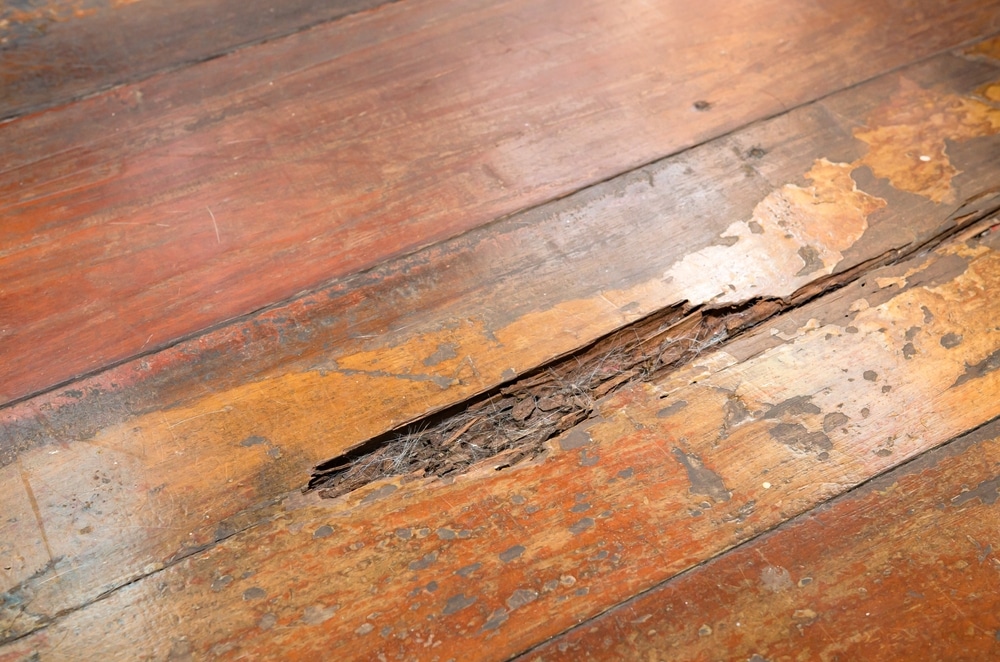
Subterranean termites often target the subfloor and floor joists before any visible signs appear on the surface. As these support structures weaken, you may notice that certain areas of your floor have become unusually squeaky, feel spongy or springy underfoot, or seem to dip slightly when you walk across them.
With hardwood floors, termite damage can appear as buckling, blistering, or a wavy surface that resembles water damage. If you have tile flooring, the moisture that termites introduce into the subfloor can loosen the grout and make individual tiles feel unstable. Laminate flooring may start to bubble or separate at the seams for the same reason.
These flooring issues are easy to dismiss as normal wear or a plumbing leak, which is exactly why termite damage to subfloors can go unnoticed for so long. If the squeaking or softness is concentrated near exterior walls or in rooms at ground level, a termite inspection should be on your list.
Tight-Fitting Doors & Windows
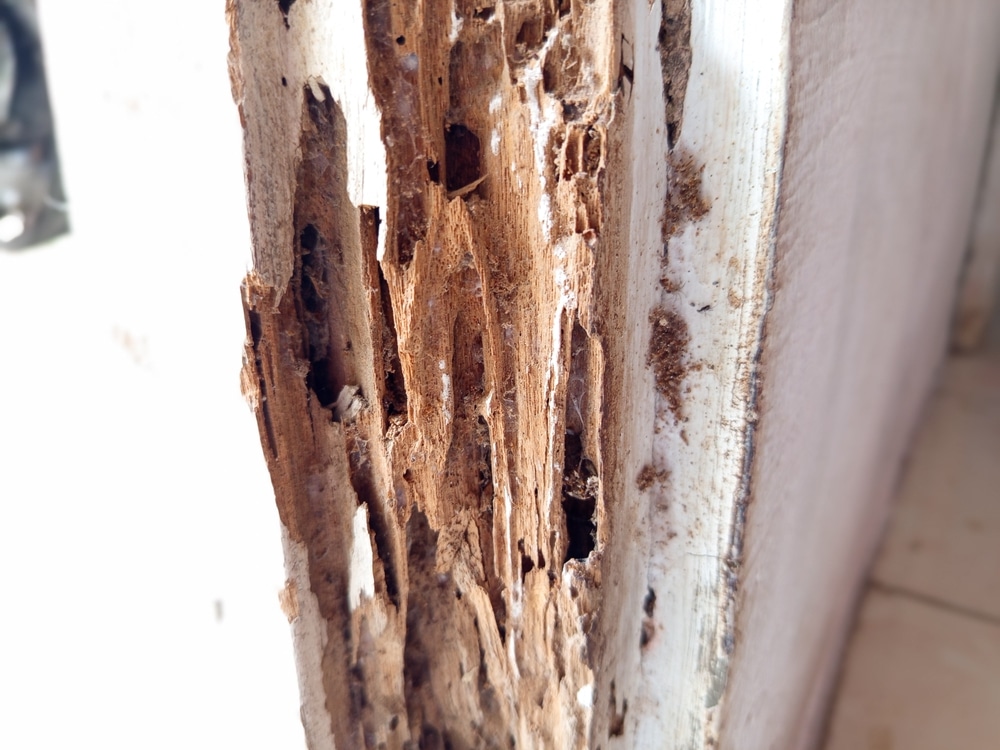
Termite damage can weaken subfloors, joists, and framing, which may contribute to soft, uneven, buckled, or sticking surfaces. These symptoms can also result from moisture, settling, or other structural conditions and should not be treated as termite-specific signs.
This is one of the more commonly overlooked signs of termites because most homeowners attribute sticky doors and windows to foundation settling or weather changes. The difference is that termite-related warping tends to be localized to specific door or window frames rather than affecting the entire house evenly. If one particular door has started jamming and you also notice bubbling paint or fine cracks near the frame, it is worth having a professional take a closer look.
How to Prevent Termites In Your Home
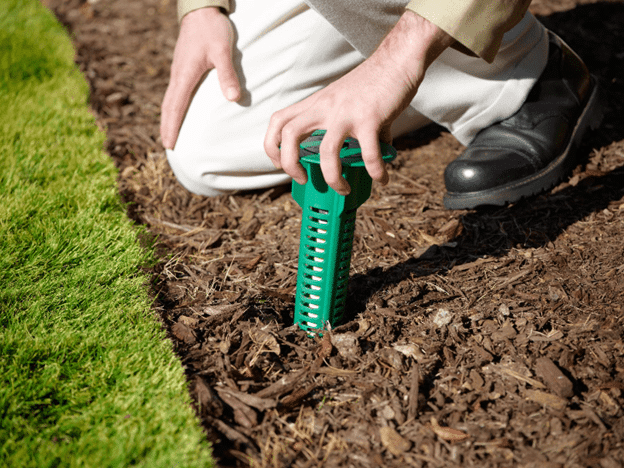
The best time to deal with termites is before they ever reach your home. No prevention method offers an absolute guarantee, particularly against subterranean termites that can forage from a colony spanning an area the size of a football field, but reducing the conditions termites need to thrive and adding a layer of professional monitoring dramatically lowers your risk.
Reduce Moisture
Termites are drawn to damp, decaying wood, so limiting moisture near your foundation removes one of their biggest incentives to settle in. Clean out gutters and downspouts regularly, and make sure downspouts direct water away from your foundation rather than letting it pool nearby. Fix leaky exterior spigots and hoses promptly, and grade the soil so it slopes away from your home rather than toward it.
Crawl spaces deserve particular attention. Poor ventilation traps humidity, creating exactly the environment subterranean termites prefer. A dehumidifier or improved crawl space ventilation can make a meaningful difference in terms of termite pressure over time.
Eliminate Wood-to-Soil Contact
Any point where wood touches soil directly gives termites a hidden path into a structure without ever crossing open ground. Check deck posts, porch supports, fence posts, and exterior siding for direct soil contact, and correct any you find. Keep firewood, lumber, and other wood stacked well away from your house and off the ground rather than leaning against the foundation or an exterior wall.
Manage Mulch & Landscaping
Wood-chip mulch placed directly against the foundation retains moisture and can provide termites with a food source right next to your home. Where possible, keep mulch a few inches away from your siding and foundation walls, and consider a non-organic ground cover, like stone, in the areas closest to the house. Trim back shrubs, bushes, and overhanging tree branches so sunlight and airflow can reach the soil around your foundation and help it dry out between rainfalls.
Store & Maintain Wood Properly
Dead trees, tree stumps, and fallen branches left on a property are common termite entry points into the yard, since a colony can establish itself in dead wood long before spreading toward a structure. Removing dead wood, repairing or replacing any water-damaged lumber on decks or fences, and keeping stacked wood elevated and away from the house all reduce the chances of termites taking up residence nearby.
Termite-Resistant Building Materials
If you are building new or replacing exterior wood, using termite-resistant materials such as treated lumber, certain naturally resistant wood species, or composite decking reduces the structure’s food value to termites. This is a more practical step during construction or a major renovation than for existing wood, but it is worth discussing with your contractor for any project involving new exterior wood.
Baiting & Monitoring Systems (Professional Termite Control)
DIY steps reduce risk, but they do not eliminate it, especially in the Carolinas, where humid summers and older housing stock create year-round termite pressure.
Our termite bait stations are installed in the soil around the property as part of a baiting and monitoring system. Foraging termites encounter the stations during their normal activity, feed on the bait, and carry it back to the colony. The stations also provide ongoing monitoring for termite activity.
Why DIY Termite Prevention Isn’t Always Enough
Store-bought sprays and home remedies may kill visible termites but are not designed to provide structural protection or eliminate an established subterranean termite infestation. A professional termite inspection can determine whether there is evidence of termite activity and what treatment, if any, is appropriate.
Termite Treatment Options
The right termite treatment depends on which species you are dealing with, how far the infestation has spread, and how your home is built. Subterranean termites, the most common species across the Carolinas, live in underground colonies and typically call for a soil-based liquid termiticide barrier or an in-ground bait system. Drywood and dampwood termites, which nest directly inside wood rather than the soil, often respond better to targeted, localized application.
Termite treatment starts with identification. During your inspection, a licensed technician confirms the species involved, maps out where activity is concentrated, and looks at construction details like slab type, crawl space access, and soil-to-wood contact points. That information determines whether a liquid barrier, a bait system, targeted spot treatment, or some combination gives your property the strongest protection.
Liquid Termite Treatment
Liquid termiticide treatment creates a continuous barrier in the soil around and beneath the structure. Termites cannot detect the treated soil, so they pass through it, pick up the active ingredient, and carry it back to the colony, where it spreads to other termites through contact and grooming.
Bait Stations
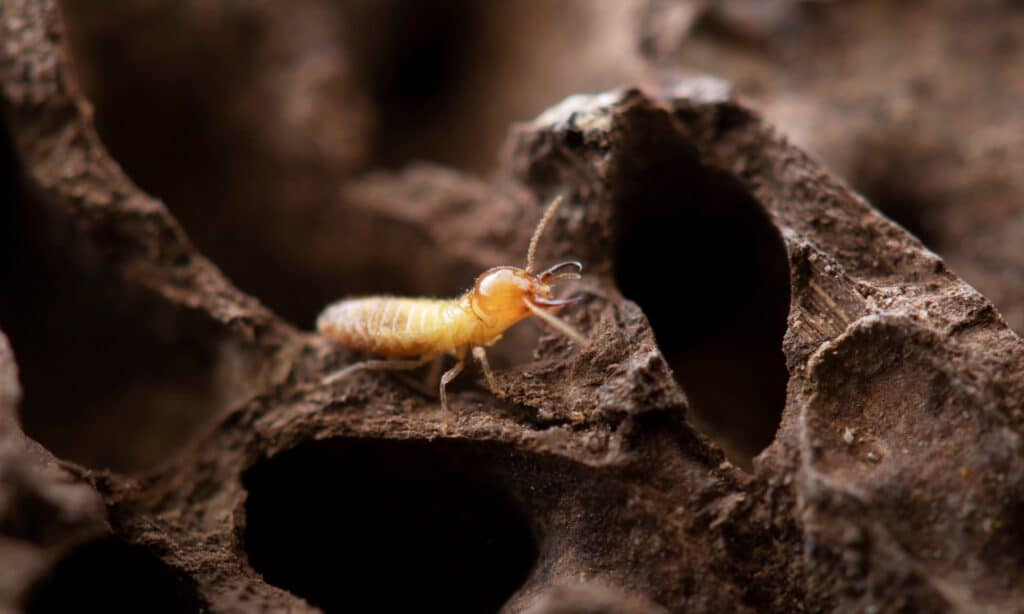
Bait and monitoring stations are placed in the soil around your property’s perimeter. Rather than creating a barrier, they give foraging termites a food source containing a slow-acting active ingredient, which is carried back to the colony over time. This approach tends to work more gradually than a liquid barrier, but it is a strong option for properties where continuous soil treatment is difficult, and it also serves as an ongoing monitoring system after the colony is addressed.
Targeted Applications
Drywood and dampwood termites live within wood rather than relying on soil contact like subterranean termites. Treatment depends on the extent and location of activity. Localized treatment may be appropriate for limited drywood infestations, while more extensive activity may require other methods. Dampwood termite management also includes correcting the moisture conditions that allow the infestation to persist.
Moisture Control
Termites, especially dampwood termites, are drawn to consistently moist wood, so reducing moisture around your home is part of a complete treatment plan, not just a prevention tip. This can include correcting grading that pools water near the foundation, repairing leaking gutters or plumbing, improving crawl space ventilation, and keeping mulch and soil from holding excess moisture against siding. Addressing these conditions alongside active treatment helps prevent the same area from attracting a new colony.
What to Expect on Termite Treatment Day
Whether occupants need to leave the home depends on the product, treatment method, and label directions. Your technician will explain any preparation, restricted-entry requirements, and when people and pets may safely resume normal use of treated areas.
How Long Does Termite Treatment Last?
Control timelines vary by product, treatment method, infestation level, construction, and environmental conditions. Liquid treatments can begin affecting termites that contact the treated zone relatively quickly, while bait systems generally work more gradually as foraging termites locate and feed on the bait. Your technician can explain what to expect for the specific treatment used.
How Much Does Termite Treatment Cost?
Treatment cost depends on the method used, the size of your property, and the extent of the infestation. Liquid treatments, bait station systems, and targeted spot treatments all carry different price points, and combination treatments cost more than a single method alone.
Schedule Your Free Property Assessment with Anticimex Carolinas Today!
Why let termites quietly destroy your Carolina home? Anticimex offers no-cost termite inspections to catch problems before they turn into expensive disasters. Our termite exterminators bring years of experience and local knowledge to every job.
Give us a call today or fill out our website form to book your inspection.
Frequently Asked Questions
Can termites come back after professional termite treatment?
Termites can potentially threaten a home again after an infestation has been eliminated, especially when conditions around the property remain favorable. Ongoing termite monitoring and routine inspections can help identify new activity and provide continued protection.
Do termites go away on their own?
No. A termite colony is unlikely to simply leave a home because its food source remains available. Without effective termite control, termites can continue feeding and potentially cause increasingly expensive damage.
Is termite control necessary if I have never had termites?
Preventive termite control can be valuable even if you’ve never discovered an infestation. Termites often remain hidden while feeding inside wood or underground, and the conditions in the Carolinas are favorable for termite activity. Proactive monitoring and professional termite protection can help reduce the chance of discovering an infestation only after significant damage has occurred.
Can termites spread from my neighbor's house to mine?
Termites don’t spread from house to house in quite the same way as some household pests, but subterranean termite colonies forage underground and can cover areas beyond a single property. If termites are found nearby, it’s a good reason to ensure your own home is properly monitored and protected.
Can a new house get termites?
Yes. A newly built home can still be vulnerable to termite activity. Termites can eventually reach wood and other cellulose materials in new structures, which is why termite prevention and monitoring can be beneficial regardless of a home’s age.
For more information about new construction, visit our builders page.