




Commercial Termite Control in North Carolina & South Carolina

Home » Pest Library » Termite Control » Commercial Termite Control in North Carolina & South Carolina

- Termites
- Termite Control & Prevention
- Termite Inspections
- Home Termite Control
You put a lot of effort, time, and dedication into making your business a success. However, an undiscovered and untreated termite infestation can bring all your hard work crashing down. An infestation of termites can cause serious damage that can affect your company’s ability to operate safely and efficiently. Anticimex Carolinas can help protect against these destructive insects.
For more information regarding termites, visit the following pages:
Get a Free Pest Control Quote
What Causes Termites?
Termites are attracted to a property primarily by three factors: ongoing moisture, direct contact between wood and soil, and proximity to an underground colony. While these factors don’t produce termites out of thin air, they influence whether existing soil-based termite colonies see your property as an accessible food source and nesting site.
Are Termites Dangerous?
Termites are dangerous because they can cause widespread, severe damage to buildings. Worse yet, they often remain hidden until the damage is extensive. Termites feed on wood, making your business a tempting target. They can eat through nearly any wooden structure, causing everything from sagging ceilings and floors to chewed furniture, cabinets, and window and door frames. Termites can even destroy raw materials and inventory, which you then have to pay to replace.
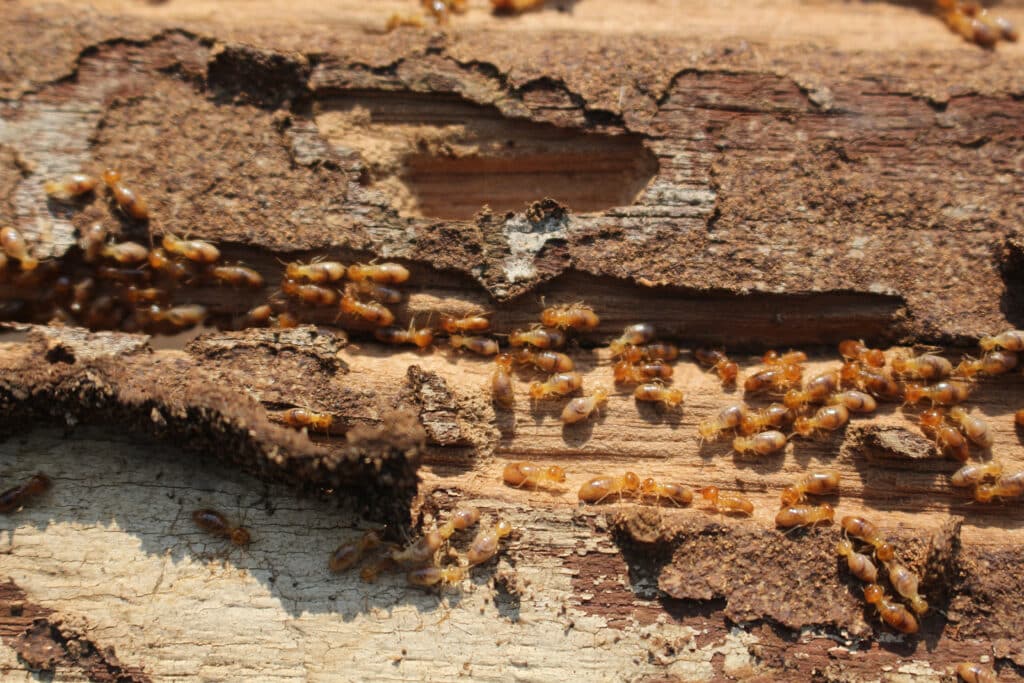
Termite damage costs a lot of time and money to fix, and the cost isn’t covered by most commercial insurance policies. If it’s severe, you may need to cease business operations during the repair work, resulting in lost revenue on top of the steep cost of getting your facility back up and running.
The primary threat from termites is structural and property damage. Because termite activity can remain hidden, an infestation may cause extensive damage before it is discovered. A professional termite management plan can help identify activity and reduce the risk of further damage.
Does My Business Need Termite Control?
Attempts to deal with termites yourself are typically ineffective and sometimes dangerous. Without proper training and skills, you might overlook damage that poses a safety hazard, putting yourself and others at risk. Visible signs of termite activity and destruction can also negatively affect your reputation and cause you to lose business.
Termites are one of the most expensive pests in the Carolinas. Your business can benefit from professional termite control solutions that prevent infestations and extensive damage before they begin, saving you time and money. Having regular checks by an expert to spot termites or signs of damage is an excellent way to stay ahead of problems and take swift action when needed.
Why Commercial Properties Face Unique Termite Risk
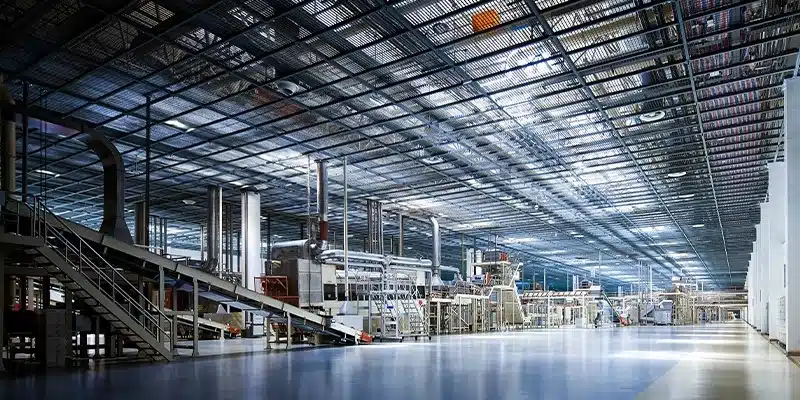
Commercial buildings often present more opportunities for termites than a typical home. Larger footprints mean more linear feet of foundation to monitor. Multi-building campuses, loading docks, and storage areas frequently keep wood pallets, crates, and packaging materials in contact with the ground. Slab-on-grade construction, common in retail and warehouse buildings, can hide termite activity behind finished flooring for years. Landscaping beds with wood mulch placed against a building’s perimeter adds another point of entry.
The financial exposure is different as well. A residential termite problem affects one family and one structure. A commercial infestation can affect lease agreements, insurance standing, franchise brand standards, tenant safety, and the resale value of an entire property or portfolio.
Industries & Property Types We Protect
- Office buildings & business parks
- Retail centers and shopping plazas
- Warehousing, distribution, and logistics facilities
- Multifamily and apartment communities
- Restaurants and food service properties
- Property management portfolios spanning multiple sites
- Schools and institutional facilities
- New Construction and ground-up development
What Commercial Termite Inspections Cover
The fundamentals of a termite inspection do not differ between homes and businesses: an inspector is still looking for mud tubes, moisture issues, wood-to-soil contact, and conducive conditions around the structure. What changes at the commercial level are the scope and the deliverables.
The scope of a commercial termite inspection depends on the property and service requested. It may include building perimeters, loading docks, storage areas, secondary structures, and other accessible areas where termite activity or conducive conditions may be present. Documented findings may assist with property-management, compliance, or due-diligence needs.
We also work around your operating hours. Inspections and follow-up visits can be scheduled before opening, after closing, or on weekends to avoid disrupting customers, staff, or production schedules.
How Anticimex Carolinas Treats Businesses for Termites
Anticimex Carolinas uses the same proven treatment technologies for commercial properties that we use for homes, scaled to your building’s size and construction. Bait station systems are placed around the perimeter at intervals appropriate for the property’s footprint and monitored on a recurring schedule. Liquid barrier treatment creates a continuous treated zone in the soil around a foundation and works well for slab-on-grade commercial construction. Which approach fits your property depends on the construction type, budget, and the level of ongoing monitoring your business wants.
The scope of a commercial termite inspection depends on the property and service requested. It may include building perimeters, loading docks, storage areas, secondary structures, and other accessible areas where termite activity or conducive conditions may be present. Documented findings may assist with property-management, compliance, or due-diligence needs.
We also work around your operating hours. Inspections and follow-up visits can be scheduled before opening, after closing, or on weekends to avoid disrupting customers, staff, or production schedules.
Maintain Discretion & Minimize Disruptions
Termite treatment should never interrupt the way your business operates. Our commercial technicians coordinate with your facilities or maintenance staff to schedule work around business hours, place bait stations discreetly so they do not affect the customer or tenant experience, and phase treatment across multi-building campuses, ensuring only one area is active at a time.

Ongoing Protection
Most businesses choose an ongoing commercial termite service contract rather than a single treatment, for the same reason many homeowners choose a termite bond: continuous monitoring catches new activity early, and the documented service history is often requested during a lease renewal, franchise audit, or property sale. For businesses managing multiple locations, Anticimex Carolinas can structure a single portfolio-level program with a single point of contact, consistent service standards, and consolidated reporting across all sites.
Signs of Termites
Termites are known as silent destroyers because they can consume the structural wood of your property for months or even years without showing any signs. By the time the damage becomes noticeable, repair expenses can quickly run into thousands.
The good news is that termites leave signs. Recognizing these clues can help you detect an infestation early and safeguard your commercial property from significant damage.
Mud Tubes
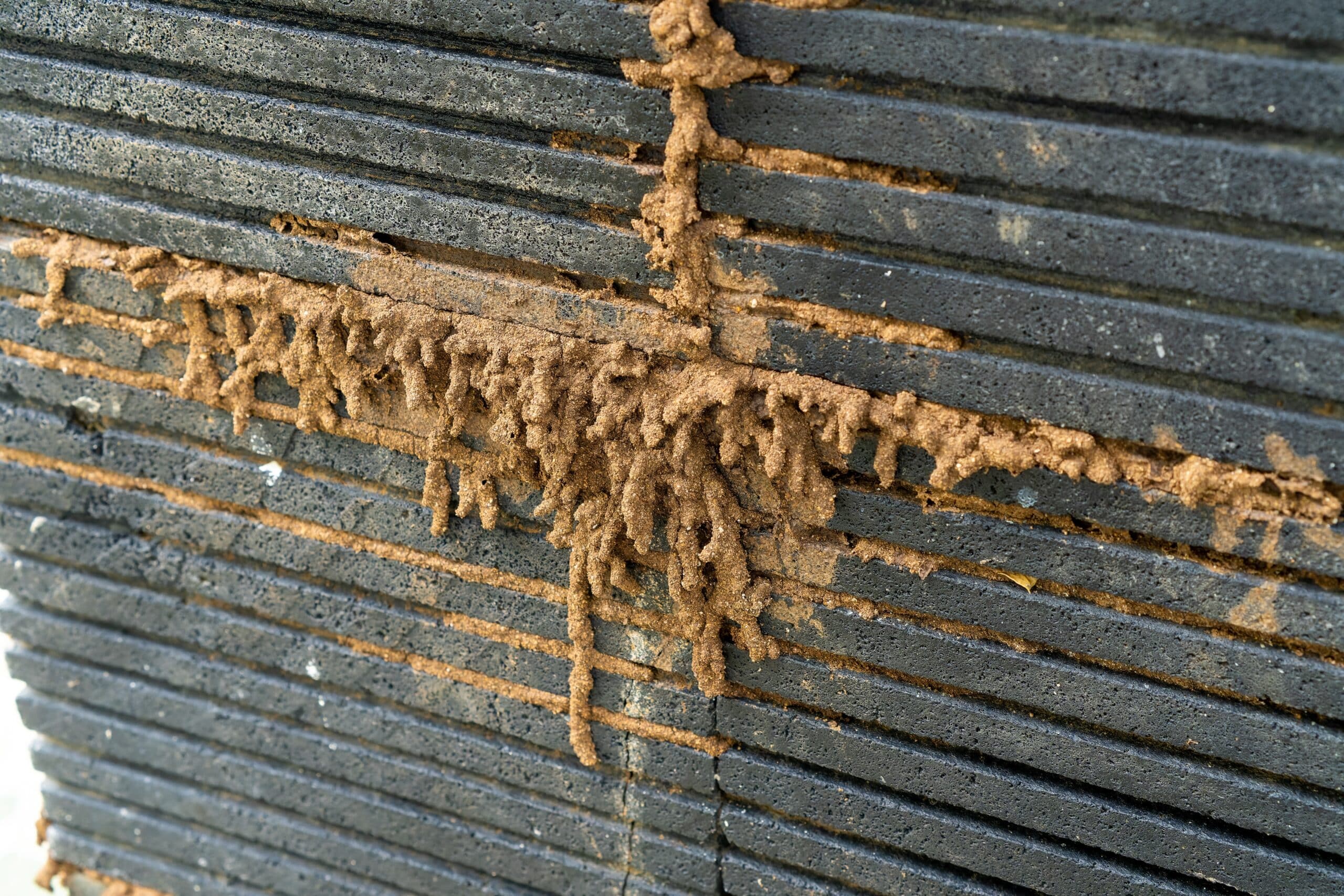
Mud tubes are a common indicator of termite infestation. These pencil-thin tunnels, created by subterranean termites, enable their safe travel from the underground colony to the wood they consume. Composed of soil, wood particles, and saliva, the tubes shield the termites from air exposure and prevent dehydration.
Mud tubes are usually found along foundation walls, crawl spaces, basement walls, around plumbing penetrations, and close to ground level on exterior siding. In severe infestations, these tubes can also be seen on interior walls or hanging from ceiling beams and floor joists. If you find a mud tube, leave it intact and schedule a professional termite inspection.
Droppings & Frass
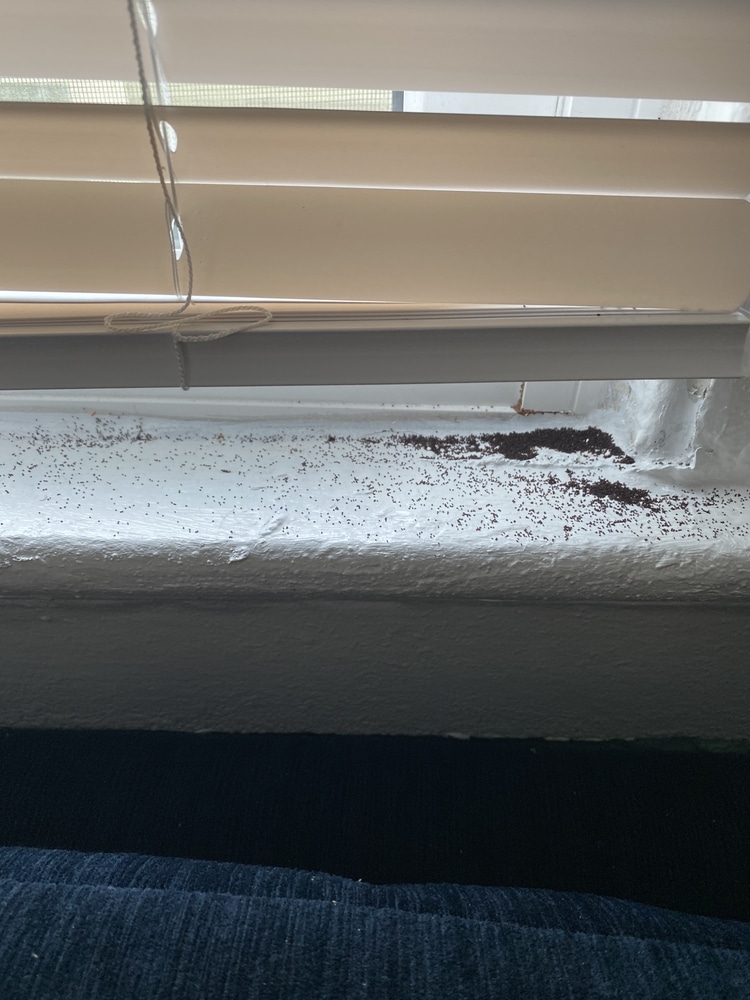
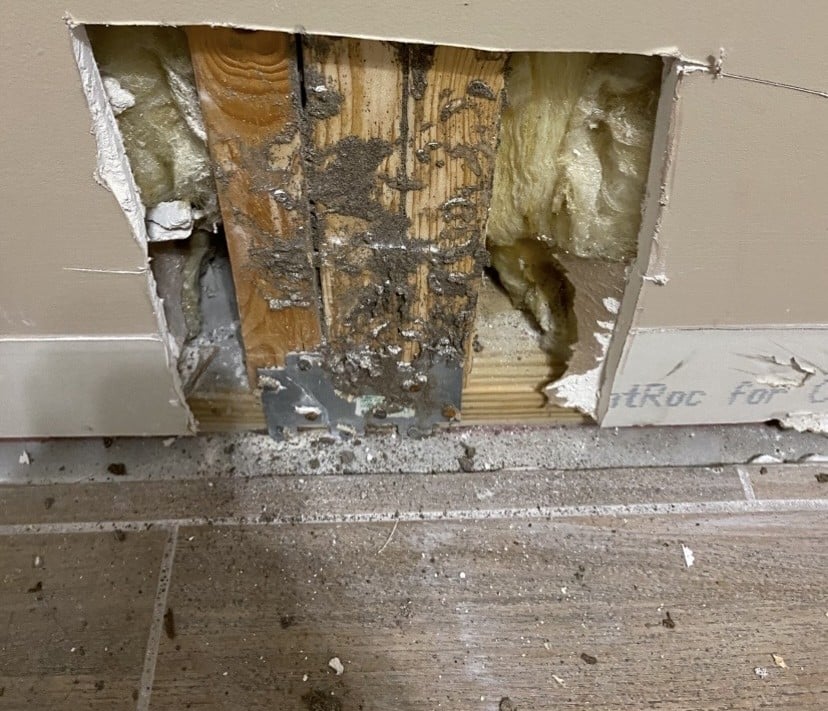
Termite droppings, known as frass, indicate drywood termite activity. Since these termites eat wood from within, they expel their fecal pellets through tiny holes called kick-out holes. These pellets tend to gather in small piles, often confused with sawdust or ground pepper.
Termite frass pellets are small, oval-shaped, and usually feature six concave sides. Their color varies from light tan to dark brown, based on the wood type they consume. You are most likely to spot frass on window sills, along baseboards, under wooden furniture, near door frames, and on the floor beneath wooden structures.
Damaged & Hollow Wood
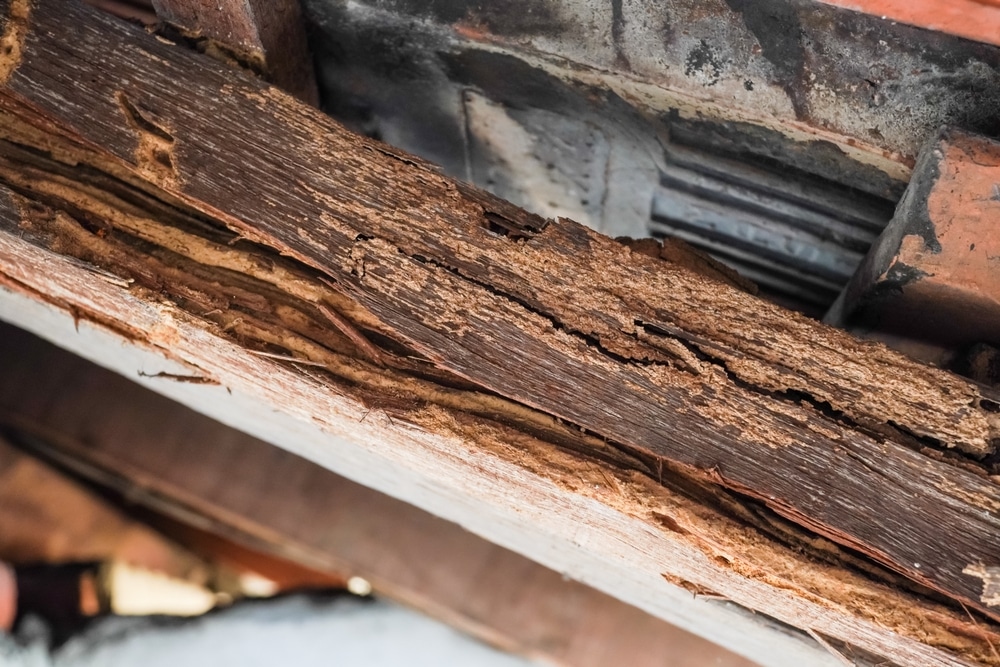
Termites consume wood internally, so a beam, door frame, or baseboard might appear normal externally but be mostly hollow inside. Listening for hollow or papery sounds when tapping on wood is a common indicator of termite damage.
Other visual signs include blistered or darkened patches on wood, uneven or bubbly paint, and wood that crumbles easily when tested with a screwdriver or sharp object. In more severe cases, floors may feel spongy underfoot, and door and window frames may not close properly because the supporting wood behind them has been damaged.
This hidden damage is why termite issues often go unnoticed for a long time. Termites usually leave the outer layer of wood, paint, or varnish unharmed, making the damage initially appear like water damage. Additionally, most business owner insurance policies do not cover termite damage, so early detection can save you thousands in repairs. If you see any of these signs, don’t delay in consulting a professional.
Discarded Wings on Windowsills
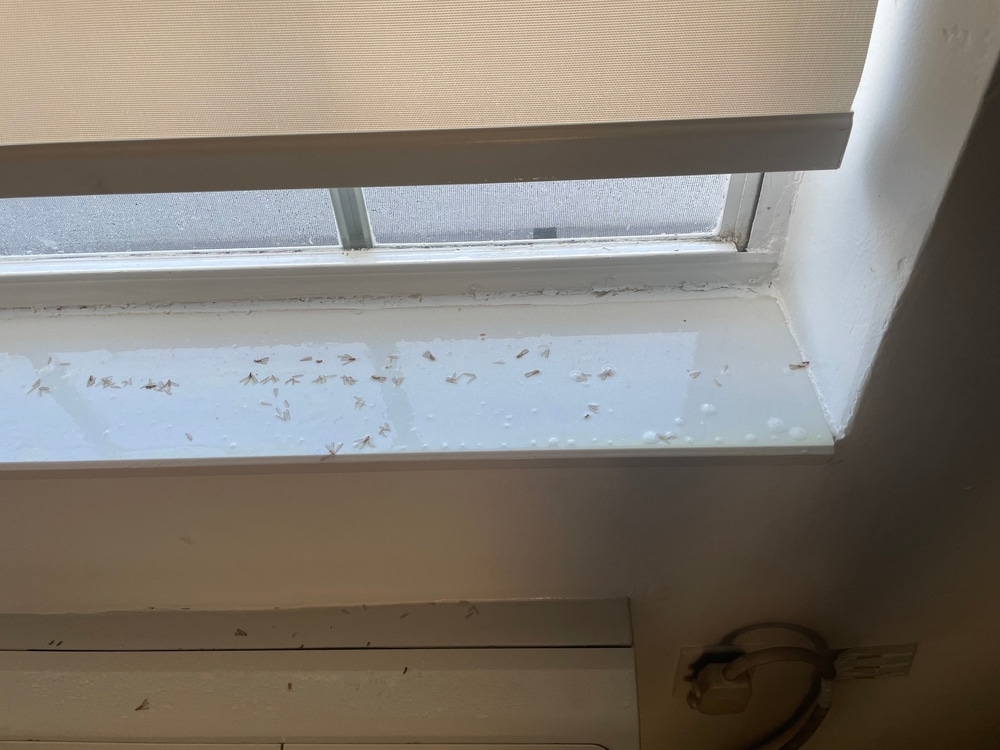
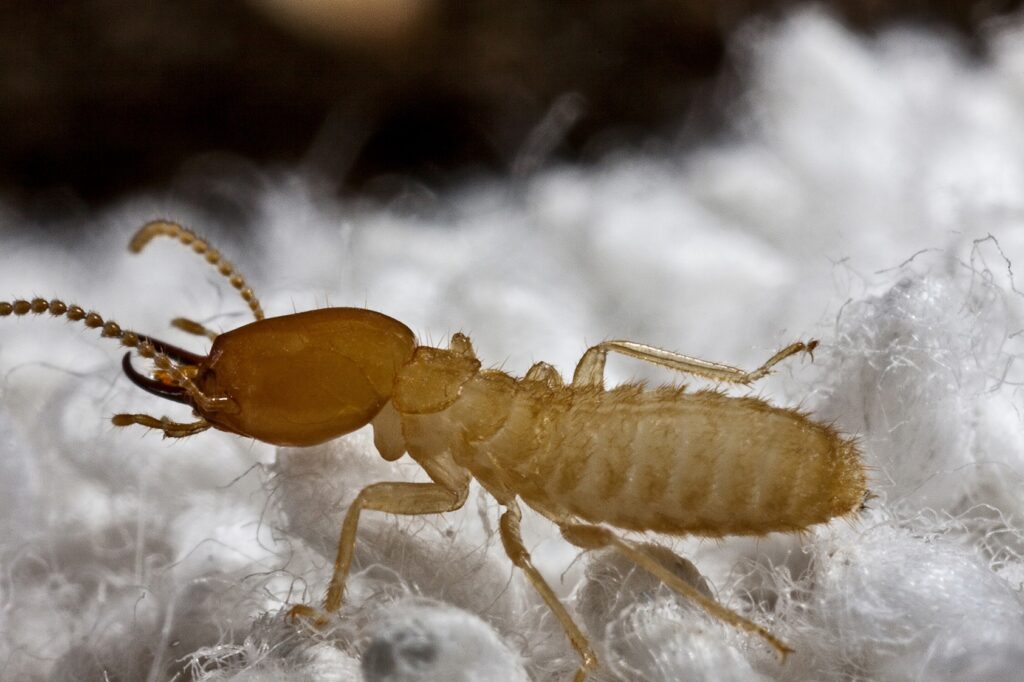
Seeing termite swarmers indoors or finding discarded wings can indicate termite activity nearby and should prompt a professional inspection. These winged termites, known as swarmers or alates, are the reproductive members of a mature colony. They typically emerge in large groups during spring and early summer to mate and start new colonies.
In the Carolinas, termite swarming periods vary by species, weather, and location. Native subterranean termites commonly swarm during warmer periods, often after rain, while other termite species may swarm later in the season. Swarmers are often found near windows, doors, and other light sources.
People often mistook termite swarmers for flying ants. The main differences are clear: termite swarmers possess straight antennae, a broad waist, and two pairs of wings that match in size and extend beyond their body. Flying ants feature elbowed antennae, a slender, pinched waist, and two pairs of wings with the front pair being noticeably larger than the rear one. If you notice discarded wings all of the same size, they are likely from termites.
Buckling Floorboards
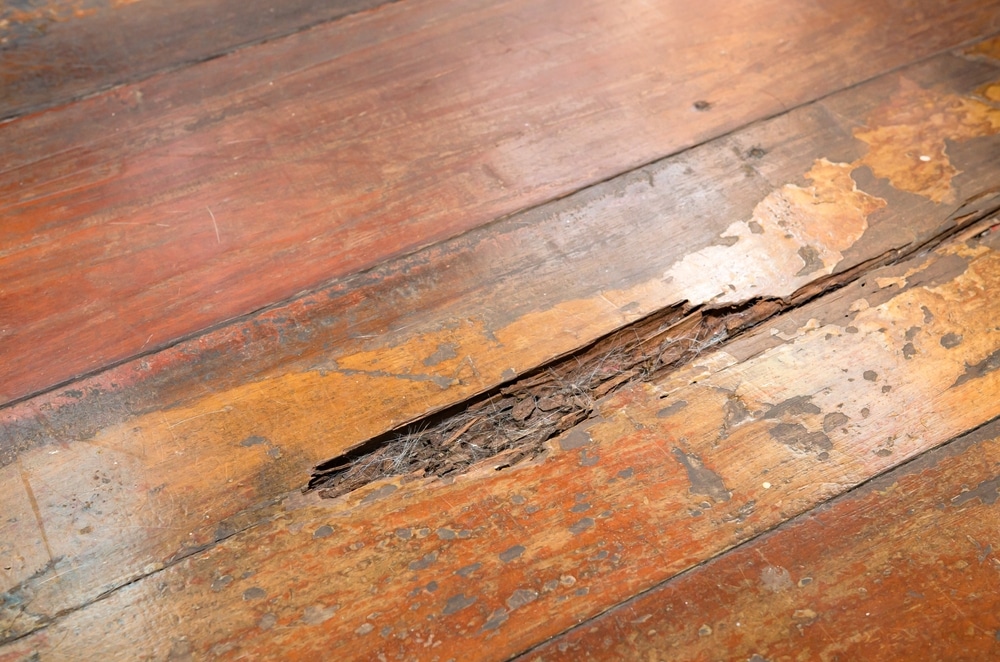
Subterranean termites typically attack the subfloor and floor joists before you see any visible signs. As these supports weaken, you might notice specific areas of your floor becoming abnormally squeaky, feeling spongy or springy when you walk, or slightly dipping.
Termite damage to subfloors, floor joists, or other supporting wood can contribute to soft, uneven, buckled, or damaged flooring. These symptoms can also result from water intrusion, construction issues, or normal wear, so a professional inspection is needed to identify the cause.
These flooring problems are often mistaken for regular wear or plumbing leaks, which is why termite damage to subfloors can remain hidden for years. If the squeaking or softness occurs mainly near exterior walls or ground-level rooms, a termite inspection should be considered.
Tight-Fitting Doors & Windows
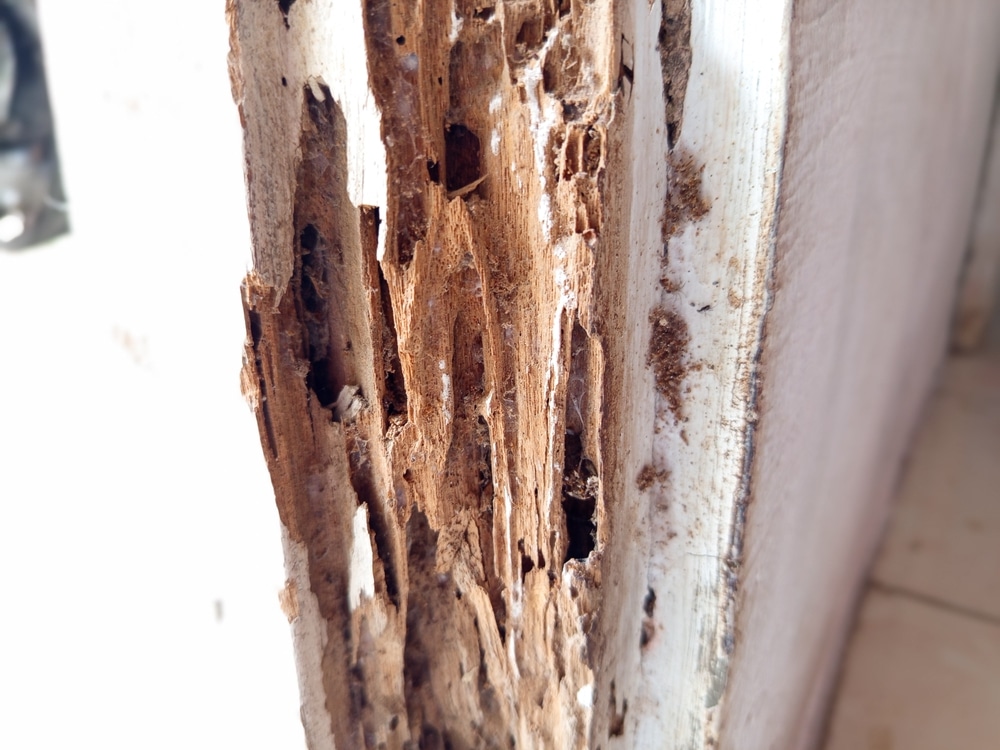
If your doors or windows suddenly become hard to open or close, and seasonal humidity isn’t the cause, termites might be to blame. Subterranean termites burrow through the wood framing near doors and windows, generating moisture and excrement that cause the wood to swell and warp. This gradual process alters the shape of the frame, leading to sticking doors or windows.
Sticking doors or windows can have many causes, including humidity, water intrusion, foundation movement, or damaged framing. Termite-damaged wood can sometimes contribute to the problem, especially when other evidence of termite activity is present. If you notice sticking doors or windows along with mud tubes, swarmers, discarded wings, or damaged wood, schedule a professional inspection.
Termite Treatment Options for Businesses
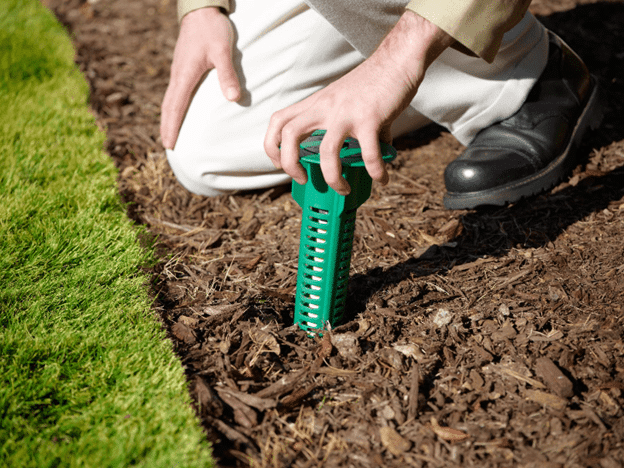
Choosing the right termite treatment depends on the species involved, the extent of the infestation, and your property’s setup. Subterranean termites, the most prevalent in the Carolinas, live in underground colonies and usually require a soil-based liquid barrier or an in-ground bait system. Drywood and dampwood termites, which nest directly inside wood instead of the soil, generally respond better to localized, targeted treatments.
Termite treatment starts with identification, not a chemical. During your inspection, a licensed technician confirms the species involved, maps the concentration of activity, and reviews construction specifics like slab type, crawl space access, and soil-to-wood connections contact points. That information determines whether a liquid barrier, a bait system, targeted spot treatment, or some combination gives your property the strongest protection.
Liquid Termite Treatment
Liquid termiticide treatment forms a continuous barrier in the soil around and beneath the structure. Termites cannot sense the treated soil, so they pass through, pick up the active ingredient, and bring it back to the colony. There, it spreads among the termites via contact and grooming.
Bait Stations
Bait and monitoring stations are installed in the soil around your property’s perimeter. Instead of forming a barrier, they provide foraging termites with a food source that contains a slow-acting active ingredient, which is carried back to the colony over time. This method generally works more gradually than a liquid barrier but is a good choice for properties where regular soil treatment is challenging. Additionally, it functions as an ongoing monitoring system after tackling the colony.
Targeted Application
Drywood and dampwood termites don’t require soil contact because they nest directly inside the wood they feed on. This reduces the importance of a soil-wide liquid barrier and shifts focus to targeted, localized treatments directly on the affected wood, often including removal and replacement of severely damaged areas. In regions with persistent drywood infestation throughout the year, whole-structure fumigation may be employed, but for the drywood activity typically seen in the Carolinas, localized treatment usually suffices. If an inspection finds a drywood infestation that necessitates a different approach, your technician will explain the available options tailored to your property.
Moisture Control
Termites, particularly dampwood termites, prefer moist wood, so controlling moisture around your commercial property is essential as part of a comprehensive treatment plan—not merely a preventive step. This involves fixing grading issues that cause water to collect near the foundation, repairing leaking gutters or pipes, enhancing crawl space ventilation, and preventing mulch and soil from retaining excess moisture against siding. Tackling these issues along with active treatment helps reduce the risk of attracting new colonies to the same area.
What to Expect on Termite Treatment Day
Most termite treatments usually don’t require you to leave your business. Liquid termiticide is generally applied around the exterior perimeter and at interior access points found during inspection. Bait stations are installed by digging small holes into the soil around the property. Your technician will explain any necessary preparation, the expected duration of the visit, and when it is safe for people and pets to return to the treated areas.
How Long Does Termite Treatment Last?
Liquid termiticide barriers start controlling activity quickly within the treatment zone, usually eliminating the colony in a few months. Bait station systems take longer because they depend on termites to forage into the stations before the treatment affects the colony, often taking several months to show full results. Your technician will give you a timeline based on the method used and the infestation’s size.
How Much Does Termite Treatment Cost?
The cost of treatment varies depending on the chosen method, property size, and infestation severity. Liquid termiticides, bait station systems, and targeted spot treatments each have different prices, and combining methods tends to be more expensive than using a single approach.
Schedule Your Free Property Assessment with Anticimex Carolinas Today!
Don’t allow termites to silently damage your Carolina business. Anticimex Carolinas provides free termite inspections to identify issues early and prevent costly damage. Our experienced, locally knowledgeable exterminators handle every job with expertise.
Give us a call today or fill out our website form to book your inspection.
Frequently Asked Questions
Can termites damage commercial buildings made of concrete or steel?
Yes. Although termites do not eat concrete or steel, commercial buildings constructed with these materials can still contain wooden framing, flooring, drywall components, furnishings, and other cellulose-based materials that termites can damage. Termites may also travel through small cracks and openings to reach these materials.
Can termites damage inventory, equipment, or stored products?
Termites primarily feed on cellulose materials. In addition to structural wood, they may damage cardboard boxes, paper products, wooden pallets, shelving, packaging, and other cellulose-based materials commonly stored in commercial facilities.
Could a vacant commercial property still have termite protection?
Yes. Termites do not require an occupied building to establish an infestation. In fact, termite activity in a vacant property may go unnoticed because fewer people are present to spot warning signs. Maintaining termite protection can help safeguard the structure while it remains unoccupied.
How can property managers protect multiple commercial properties from termites?
Property managers can use a proactive termite management program that includes routine inspections, monitoring, moisture management, preventive measures, and professional treatment when necessary. A consistent approach can make it easier to identify termite risks across an entire company portfolio.
Can new commercial buildings get termites?
Yes. New construction can still become vulnerable to termites, particularly in areas where subterranean termites are common. Preventive termite measures are incorporated during construction, and ongoing monitoring after completion can help protect a new commercial structure.
For more information regarding new construction, visit our builders page.