






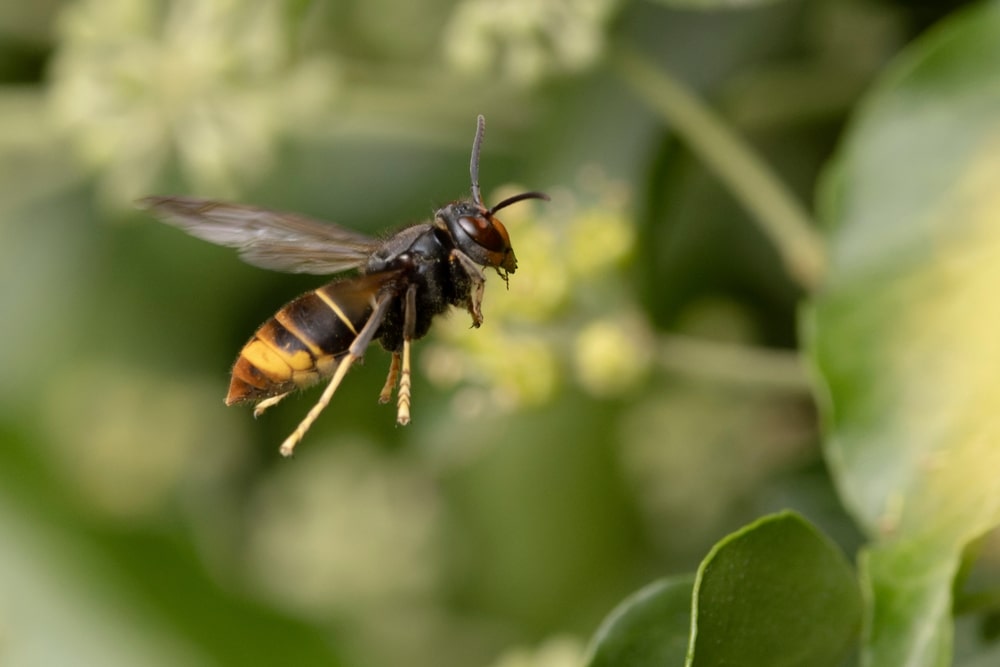
Invasive Hornet Species Found in Charlotte: What Are Yellow-Legged Hornets?
On July 28th of this year, yellow-legged hornets were confirmed to be present in Matthews, Union County, North Carolina, very close to the Mecklenburg County line. One homeowner, noticing suspicious hornet activity at a hummingbird feeder, led to a survey that found yellow-legged hornets on their property. These hornets are invasive and considered a highly aggressive pest, especially towards honeybees and other pollinators.
North Carolina state agriculture officials have ramped up surveillance for yellow-legged hornets in southern Union & Mecklenburg counties because of this finding. The apiary teams have also alerted the thousands of beekeepers in North Carolina of the threat that yellow-legged hornets pose to their hives.
Yellow-legged hornets were previously localized to Savannah, Georgia, which was the first location where one was spotted in the US in 2023, and Charleston, South Carolina. Beekeepers are urged to remain vigilant and watch out for “hawking-like behavior” around hives, as yellow-legged hornets will prey on bees and lead to complete colony failures.
Apiary teams in North Carolina have been working diligently to capture and remove invasive hornets from the area, and since the end of July, over 200 traps have been set around the Union County home where they were initially discovered.
So, what exactly is a yellow-legged hornet?
What are Yellow-Legged Hornets?
The yellow-legged hornet (Vespa velutina) is an invasive hornet native to Southeast Asia. This species was first detected in Savannah, GA, in 2023 and has since been found in several Georgia and South Carolina counties, as well as in North Carolina counties as of this year:
Georgia
- Chatham County
- Bryan County
- Effingham County
- Liberty County
South Carolina
- Beaufort County
- Colleton County
- Charleston County
- Dorchester County
- Jasper County
- York County
North Carolina
- Union County
- Guildford County
Yellow-legged hornets have been established in Europe since 2004, where they have decimated honeybee hives in several areas.
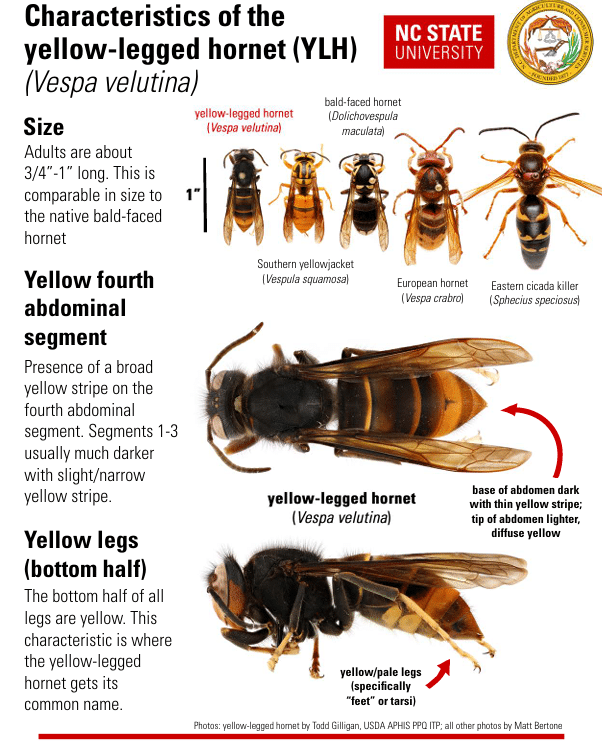
Click on the image to learn more.
How to Identify Yellow-Legged Hornets
Yellow-legged hornets are an inch long, with their most distinctive feature being that the bottom half of their legs (their “feet,” or tarsi) is yellow. This species of hornets has a dark thorax (“chest”), and has an abdomen that is darker at the top and lighter at the tip.
Yellow-legged hornets are invasive, which means they are not native to the areas where they are being found, especially not in the US in general, and they feed on species that are native to this area without any natural predators that could control their populations. Yellow-legged hornets are primarily predators of honeybees, native bees, and insects.
This hornet species exhibits what is called “hawking” behavior by hovering near entrances of honeybee hives and capturing them as soon as they exit or enter the hive.
How Long Do Yellow Legged Hornets Live?
Yellow-legged hornets have different behavior during different times of the year, with first sightings beginning in early spring and their populations grow over the summer months into the fall:
Early Spring
Queens emerge and build embryo nests, which are around the size of a tennis ball.
From Spring into Summer
The embryo nests grow into primary nests, which can be as large as a volleyball, and workers forage for prey.
Later in the Summer
Secondary nests are constructed high in treetops, typically about 33 feet above ground, and are larger than a basketball. These nests contain hundreds of workers. Reproductive larvae (females and males) are produced and reared during this time.
Fall
Males mate with new queens.
From Fall into Winter
Workers and males die out, while reproductive queens overwinter and start new nests the following spring.
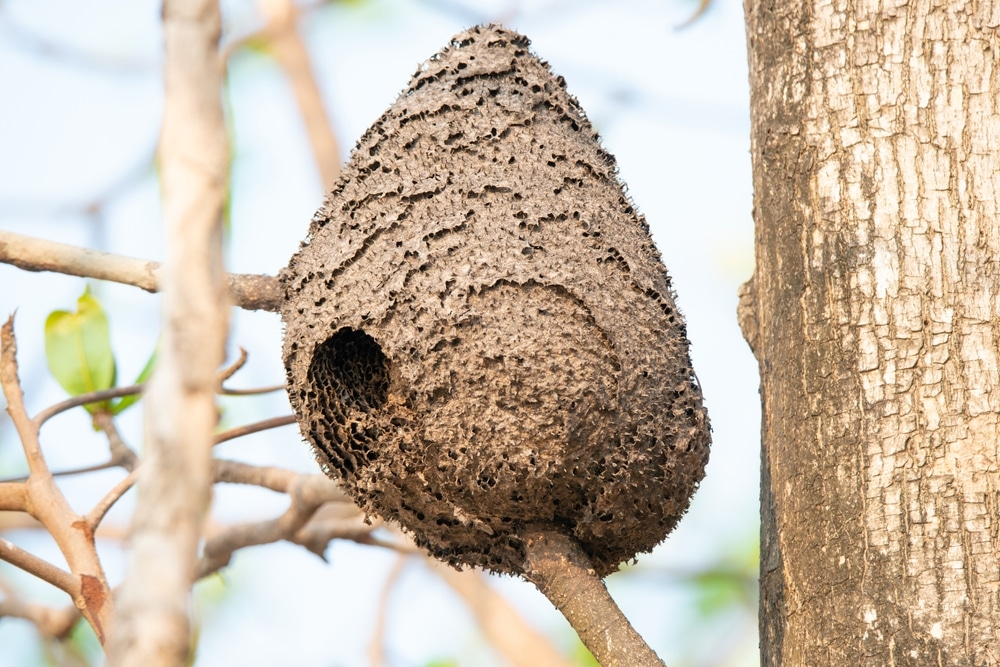
What Do I Do If I Suspect Yellow-Legged Hornets?
Beekeepers and residents are highly encouraged to set, report, and monitor traps to strengthen statewide surveillance for this invasive hornet species.
Trapping
Homemade traps are easy to make and set in March (to trap for new queens) and/or in May (to trap for workers). It’s important to monitor any traps every 1-2 weeks, and this can continue until the first fall frost.
Materials
- To make the trap, you will need: ½-1 gallon jug, string/rope
- To make the juice bait, you will need: 1 cup of grape juice, 1 cup of dark brown sugar, ½-1 cup of water
- To check the trap, you will need: a strainer, the juice bait mixture, a tray, water, resealable plastic bags
Instructions for Building & Hanging the Trap
- Cut a 1-1 ½ inch hole on one side of the top 1/3 of the jug. For easier hanging, an eye-bolt can be attached to the jug lid.
- Add grape juice to the jug.
- Mix dark brown sugar and water in a separate bowl until the sugar dissolves.
- Pour the dissolved sugar mixture into the jug with the grape juice.
- Hang baited trap at shoulder to head height on a tree or fence.
- Check every 1-2 weeks for yellow-legged hornets
Instructions for Checking the Trap
- Take down the trap and remove the lid.
- Pour liquid and trap contents into the strainer.
- Replace any lost juice bait and rehang the trap.
- Examine the collected hornets to see if any are yellow-legged.
- Place any yellow-legged hornets into resealable plastic bags, write the date of collection, and keep them in your freezer just in case an apiary inspector wants to examine them.
If you suspect that a hornet you captured is a yellow-legged hornet, take a photo of the hornet and send it to your regional apiary inspector, and they will identify the insect.
Any suspected yellow-legged hornet activity should be reported, which can be done here.
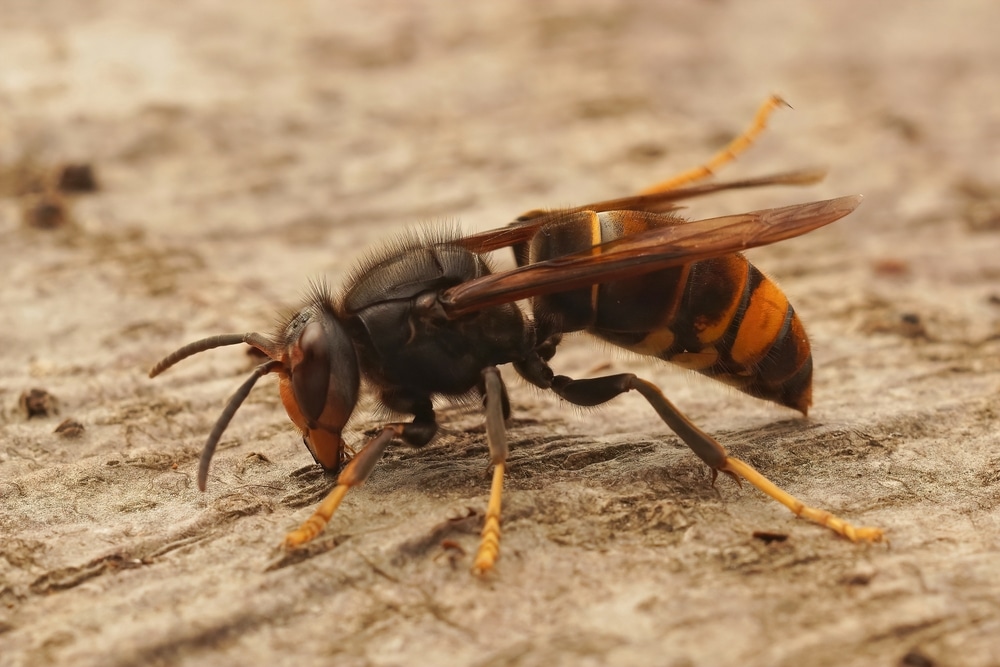
Contact Anticimex Carolinas for Comprehensive Hornet Control
If you’re unsure whether you have yellow-legged hornets and would rather not find out yourself, Anticimex Carolinas is here for you. Our hornet exterminator teams are well-equipped with professional equipment and gear to deal with your hornet control needs, as well as knowledge of North Carolina’s specific pest concerns. Yellow-legged hornets are invasive, which means they aren’t just not supposed to be on your property; they are not supposed to be in our country! However, the pest technicians at Anticimex Carolinas have all the necessary tools to help control these unwanted invaders. Contact us today!