






Termite Extermination & Pest Control Services

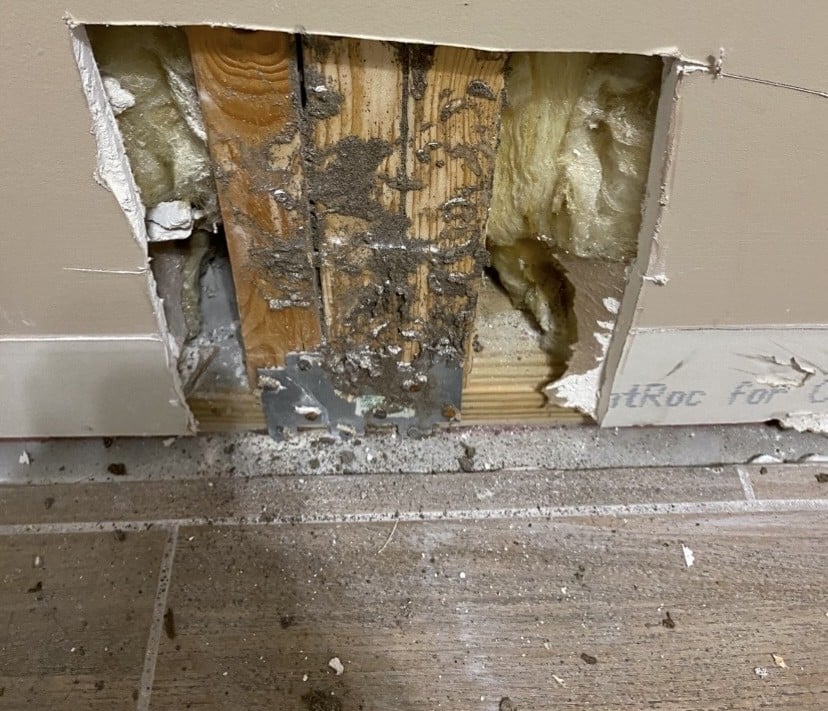
Many home and business owners turn to Anticimex Carolinas for effective termite control and general pest management solutions in North Carolina and South Carolina.
They’re hiding right now. You probably can’t see them, but somewhere in the Carolina warmth and humidity, termites are making themselves at home. The weather here gives these tiny pests everything they need: comfortable temperatures, moisture, and plenty of wood to chew through. Each year, these nearly invisible insects cause over $5 billion in property damage nationwide.
If you own a home in the Carolinas, you might be at risk. Termites work in secret, eating away at wooden structures from within while you go about your normal routine. Most homeowners don’t notice them until the damage is already severe—and expensive—to fix.
Our North Carolina and South Carolina termite control plans focus on stopping these destructive insects before they empty your wallet. Reach out to one of our termite exterminators today to protect your property from these unwanted visitors.
Get a Free Pest Control Quote
Table of Contents
What Are Termites?
Often referred to as “silent destroyers,” termites are tiny, wood-eating pests known for their destructive tendencies. In nature, these social insects play a significant ecological role, breaking down tough plant fibers, particularly cellulose, in wood and other plant materials. While this can be beneficial in the natural world, it can wreak havoc on ours. To satisfy their cellulose-rich diets, these creatures target a variety of man-made structures, including home foundations, furniture, shelving, books, carpets, and insulation. This can cause an extensive amount of damage and result in substantial financial losses to property owners. Detecting termite infestations early can often be challenging. This is why it’s so important to take proactive measures to protect your home and business from these destructive invaders.
How to Identify Termites
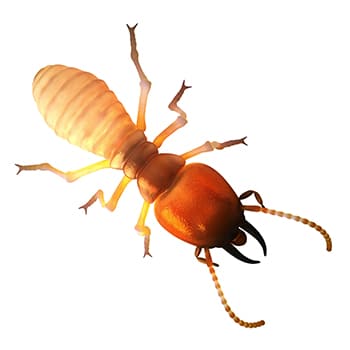
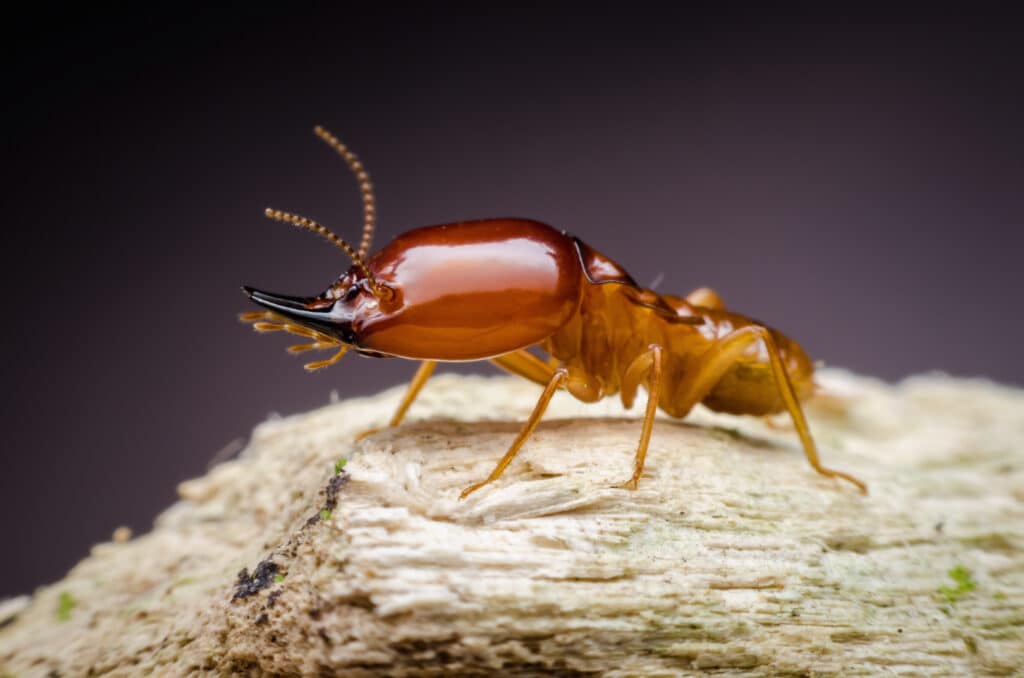
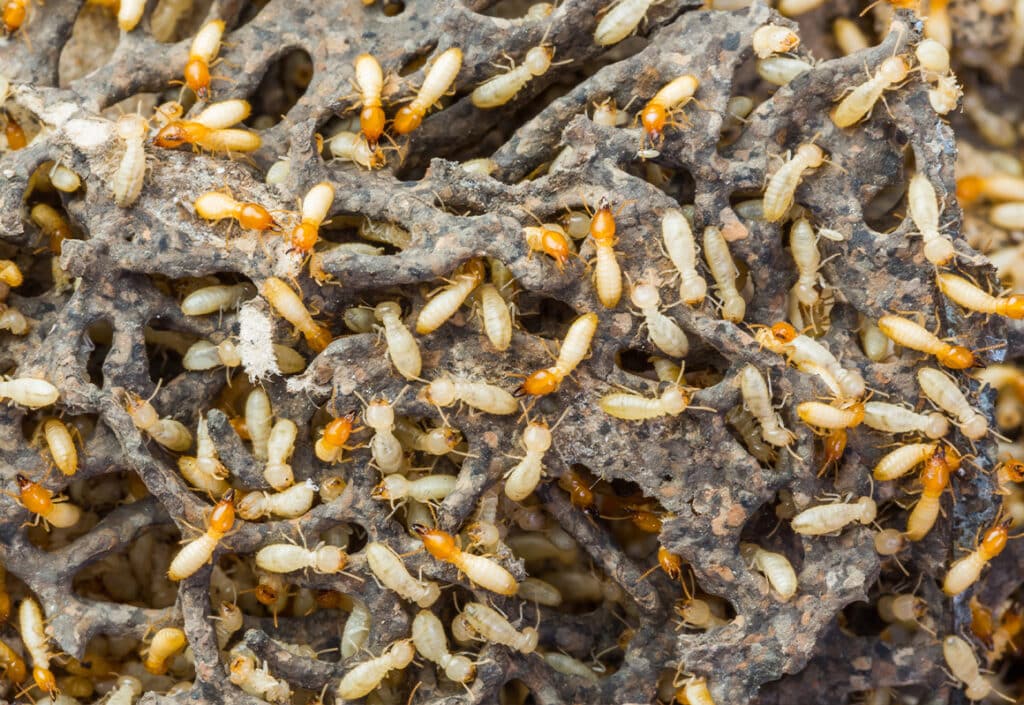
Termites are insects, not arachnids, so they have six legs and their bodies are divided into segments. Termites may also have wings, which are all around the same length. Even though termites are sometimes confused with ants, they have distinct features that set them apart. An ant’s front wings are longer than its back wings, whereas a termite’s front and back wings are equal in length. Termites also have different antennae than ants. For termites, their antennae come straight out of their heads. By comparison, the antennae of ants, such as wood ants, are bent at a 90-degree angle.
Termite Species Found in the Carolinas
If you’ve lived in the Carolinas for any length of time, you’ve probably dealt with termites yourself or heard horror stories from a neighbor. These pests love our region almost as much as we do.
The warm, humid Carolina climate that makes our summers so pleasant also attracts various wood-destroying insects, with termites being the worst offenders. Several types of these wood-munching bugs call our region home:
Drywood Termites
Larger than subterranean varieties at about 3/8 inch, featuring reddish-brown heads and cream bodies. These independent pests live completely inside the wood they’re eating without needing any soil contact. Look for tiny mounds of pellet-shaped droppings that look similar to fine sawdust.
Eastern Subterranean Termites
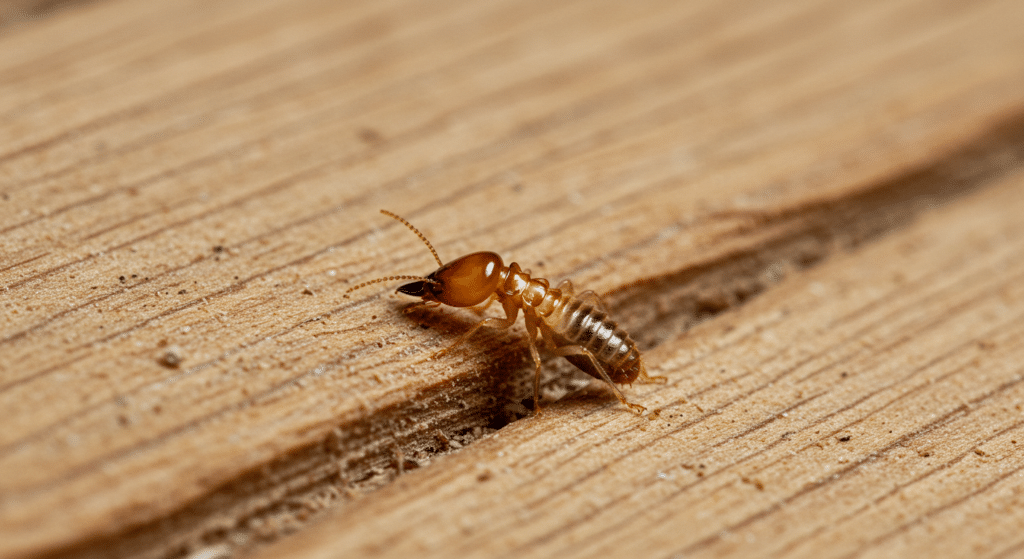
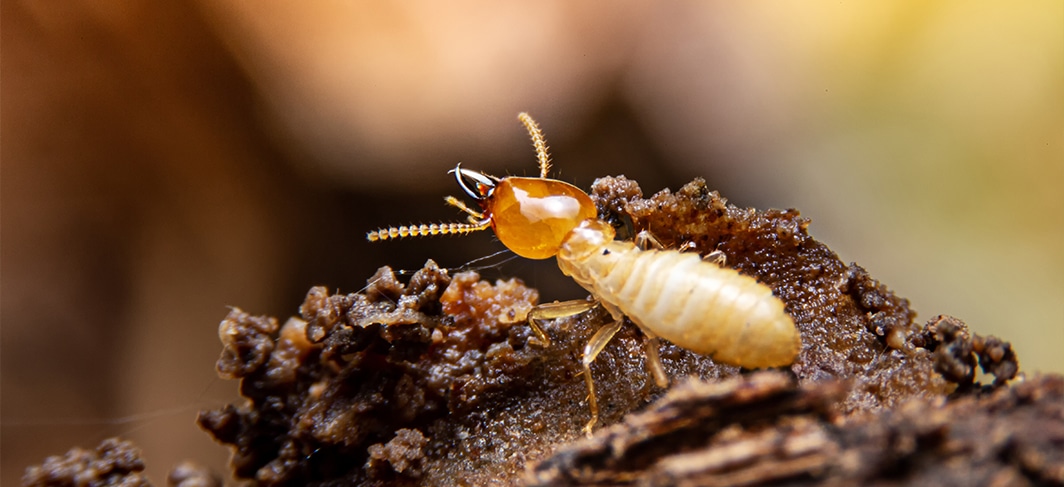
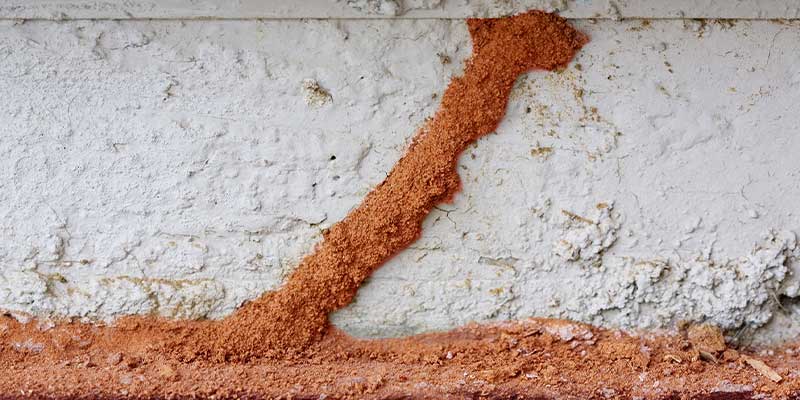
Small grayish-white insects measuring about 1/8 inch with soft bodies that tear easily. They build those telltale mud tubes you might spot along foundation walls and absolutely need soil contact to survive. In spring, you’ll notice their swarmers flying around – dark brown with see-through wings nearly twice as long as their bodies.
Formosan Termites (Super Termites)
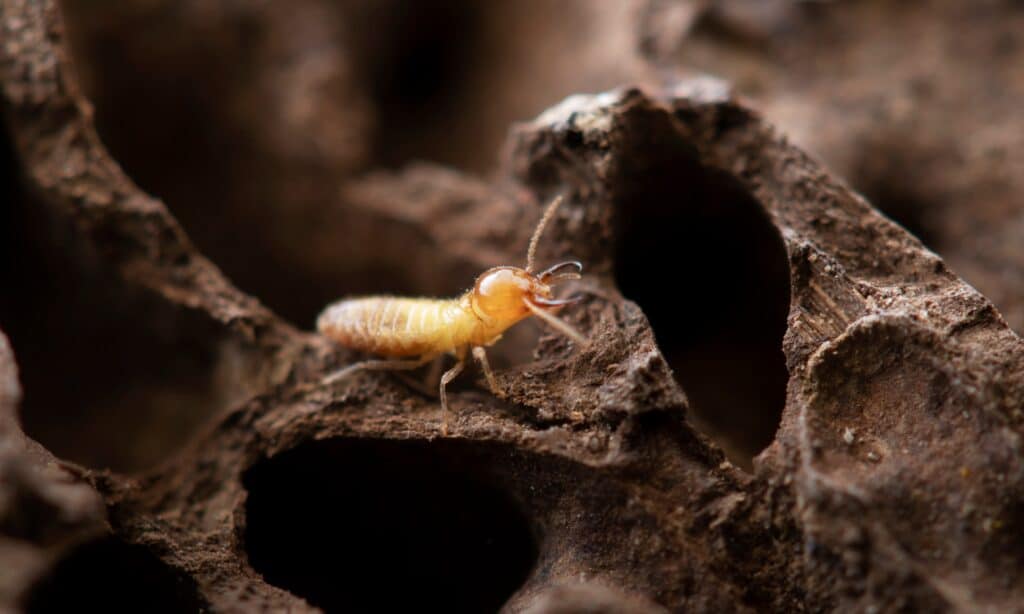
These yellowish bugs that are larger than Eastern Subterranean termites. These aggressive eaters can chew through wood twice as fast as other termites. Their massive colonies can reach into the millions, and they create distinctive carton nests inside walls using a mixture of wood particles and soil.
Termite Swarmers vs. Ant Swarmers
There are a few ways to tell if you are finding termites or ants around your property:
Body Shape
Ants have a noticeably segmented body with a “pinched waist,” while termites are more rectangular in shape.
Antennae
Ants have a “bent” antenna that looks like an arm bent at the elbow, and termites have straighter antennae.
Wings
Ant’s wings are more perpendicular to their bodies, but termite wings are more parallel.
Warning Signs of a Termite Infestation
Spotting termites early isn’t easy. They typically hide in wooden structures or underground, out of the sunlight. But catching them before they cause extensive damage can save you thousands in repair costs.
Keep an eye out for:
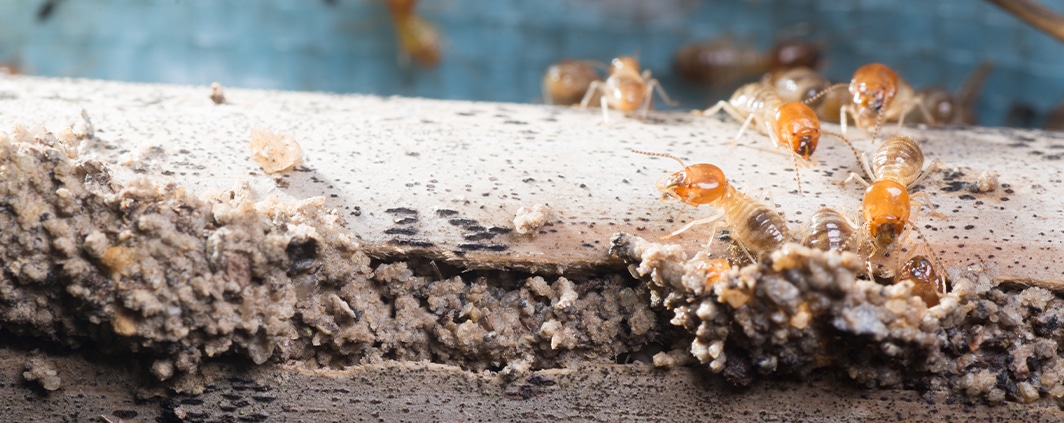
- Pencil-thin mud tubes running along foundation walls
- Wood that sounds hollow when you knock on it
- Doors or windows that suddenly stick for no reason
- Small piles that look like coffee grounds (that's termite waste)
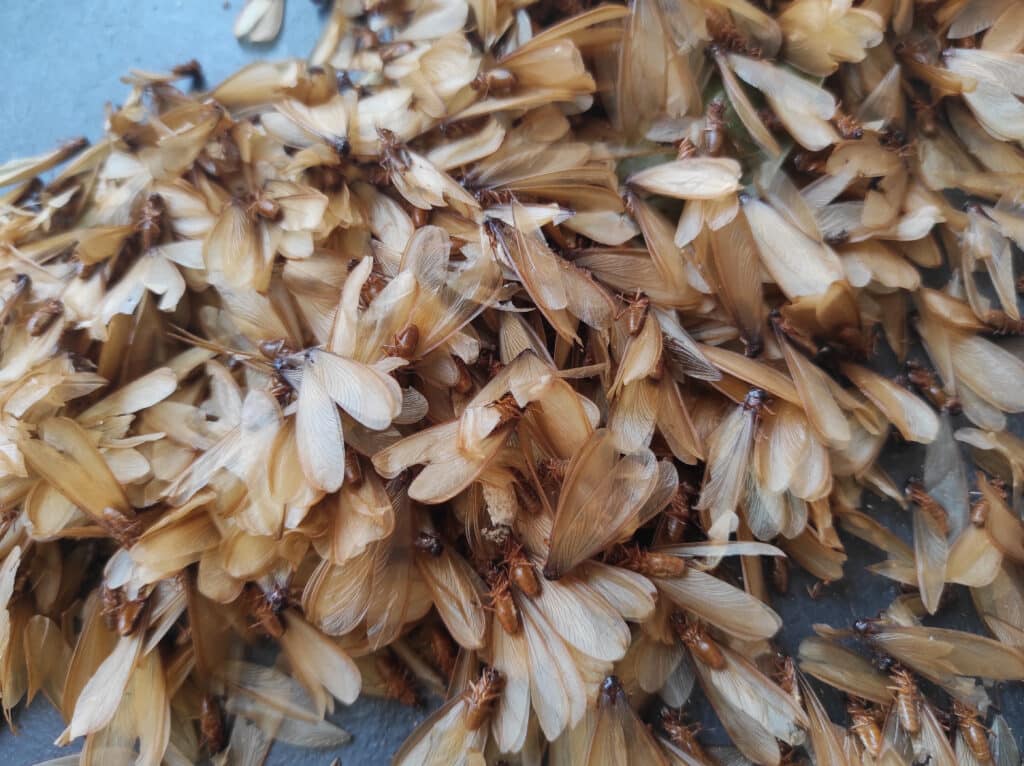
- Piles of wing fragments near windowsills or door frames after swarm season
At Anticimex Carolinas, we’ll thoroughly inspect your property to determine whether termites have moved in. Our termite exterminators in the Carolinas know what to look for. They can identify which termites you have and how they’re operating. Then we’ll put together a plan to stop them before they can do more damage.
Don’t wait until you see obvious signs – by that point, they’ve probably been munching away for far too long.
Signs of Termite Damage
Termite damage is more than an eyesore. Many of the warning signs of termite damage indicate a severe problem that poses a threat to your home’s safety and structural integrity. It’s often difficult for homeowners to identify termite infestations before they cause significant damage. By the time you notice it, you could have widespread damage. It’s best to call in the experts as soon as possible to inspect your home, assess the extent of the damage, identify the source of the problem, and enhance the effectiveness of termite treatments.
Here is a list of what to look for when you suspect termite damage:
- Small holes in drywall (often referred to as "kick holes")
- Gaps in the floorings
- Peeling paint
- Clicking noises from termite jaws eating through wood and other materials
Wood pieces that termites often target include:
- Porches and decks
- Roof sheathing
- Door and window frames
- Rafters
- Attic beams
- Siding
- Walls
- Floors and subfloors
- Wood trim
- Furniture
Our Advanced Termite Treatment Approach
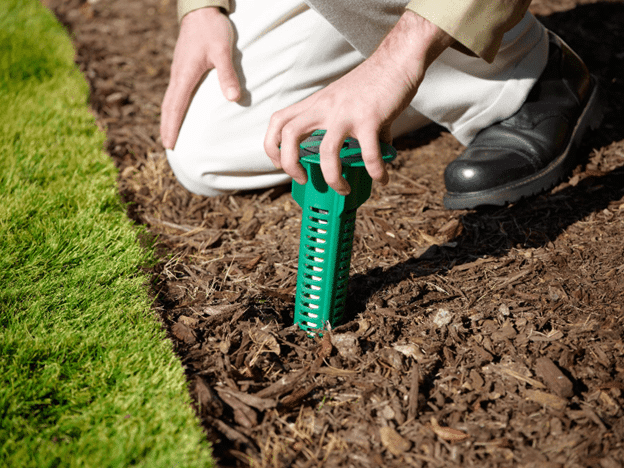
How We Treat Termites
Those tiny wood-munching insects can wreak havoc on your Carolina home, but don’t worry—you’ve got options to fight back. With help from a professional termite exterminator, you’ll stand a much better chance of winning this battle. We offer several battle-tested methods to clear these stubborn pests from your property.
Here’s how we can help protect your home:
Bait Stations
We set up bait stations with tasty cellulose materials around your yard. Termites can’t resist—they grab the bait and carry it right back to their colony, slowly wiping out the entire nest. These stations also let us track where termites are active so we can stop them before they invade your home.
Direct Wood Applications
For wood that’s already under attack, we apply treatments directly to the affected areas. This kills termites right where they’re feeding and stops further damage in their tracks.
Soil Barrier Treatments
We also create protective barriers by applying liquid treatments to the soil surrounding your home. This establishes a boundary that prevents termites from reaching your foundation.
Full-Structure Fumigation
Sometimes, when things get really bad, we might suggest using gas throughout your entire home structure. You’ll stay somewhere else during this process, but it handles serious problems completely.
Here are some of the key benefits of Sentricon termite bait stations:
Non-Intrusive
Sentricon stations are discreet. They won’t disrupt your daily activities or the aesthetics of your property.
Environmentally Friendly
These systems are specifically designed to target termites, preventing any damage or harm to other organisms and the surrounding environment.
Continuous Protection
Sentricon systems can be installed to both treat and prevent termite infestations. Their advanced technology provides ongoing protection against termite activity.
Our Proven Carolina Termite Protection System
At Anticimex Carolinas, we threw out the boring old termite control playbook. Instead, we mixed tried-and-true methods with cutting-edge tech to build a protection system that works for Carolina properties.
You deserve quick-acting treatments without the hassle of full fumigation. That’s why we provide solutions that knock out your termite problem fast, so your family life stays normal and nobody faces unnecessary health risks.
Our technicians constantly study new termite-fighting strategies to make sure they are always ready for any outcome. We take extra time during home inspections to show you exactly what we found and spell out all your options. This way, you can make informed decisions about protecting your home – probably the biggest purchase you’ll ever make.
What makes us different? We focus heavily on stopping problems before they start. Rather than just fixing termite damage after it happens, we help you avoid the whole mess through scheduled checkups and upkeep. This strategy saves your wallet and your sanity over time.
Sentricon Bait Systems
Experienced termite control professionals will strategically place termite bait stations in the soil around the home. Recruit HD, the active ingredient in each bait station, has been scientifically proven to eliminate an entire termite colony—comprising of thousands of wood-damaging insects—with as little as one tube of bait. Once the system is installed, the bait is immediately available to foraging termites. Termites will then share the bait until the entire colony is eliminated, including the queen, leaving no harmful chemicals behind.
Termite Dangers & Impact
Termites can quickly and quietly compromise the structural integrity of homes and businesses, and their impact can often be underestimated. The damage caused by termites can range from seemingly harmless surface imperfections to extensive structural compromise. Not only can this lead to significant financial losses, but it can also put your health and safety at risk.
Proactivity is crucial in managing termite infestations. These pests are highly adaptable and resilient, and unchecked colonies can become breeding grounds for further infestations across properties in the broader community. Regular inspections, prompt detection and effective termite treatment methods are key to minimizing these risks. At Clark’s Pest, our focus goes beyond addressing current issues; we implement effective solutions to prevent future problems from impacting your home or business, as well as the greater community.
Effects of Termites on Carolinas Homes & Businesses
Since termites eat wood and plant-based products indiscriminately, they can take a chunk out of the value of your North Carolina or South Carolina home or business. The wood of many buildings helps hold it together through a system of framing components. When one of these pieces is weakened, all the other beams, posts, and supports that depend on it are affected as well.
Even though termites can sometimes do their damage gradually over several months or a couple of years, the weakening of your property can be permanent and require replacing large sections of the framing. However, if the termite infestation is caught soon enough, the building’s long-term value can be saved.
In addition to the framing of any North Carolina or South Carolina home or business, termites can also go after doors, window frames, and siding. Not only is the damage unsightly, but when termites infest these portholes, they can threaten the energy efficiency and the smooth operation of the doors and windows.
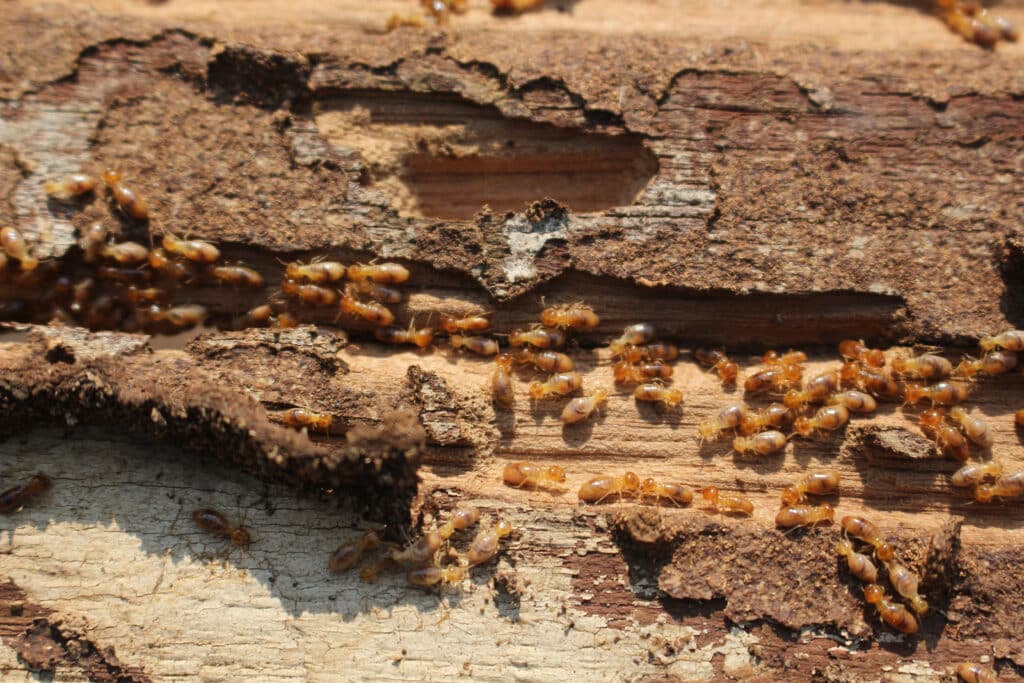
The market value of your home can also drop significantly due to termite damage. Even signs of a former infestation can cause a buyer to move to the next option. Also, termite damage can, in some cases, be enough to slow—or even negate—a sale if it is found during the inspection process.
Termite Prevention Techniques
You can take action to minimize the risk of a termite infection in your home by doing the following:
- Reinforce the structure during construction.
- Use concrete, metal, or plastic barriers to reinforce the foundation.
- Remove tree stumps, roots, and wood debris.
- Keep water drained away from buildings.
- Stack firewood off the ground and away from your home.
- Plant trees at least 20 feet away from your home.
- Invest in preventative termite treatment.
Despite your efforts to deter termites, they are good at hiding their presence until the damage they cause is already serious. The best strategy to protect your home is through professional termite control.
Contact AX Carolinas for Professional Termite Control
Why let termites quietly destroy your Carolina home? Anticimex offers no-cost termite inspections to catch problems before they turn into expensive disasters. Our termite exterminators bring years of experience and local knowledge to every job.
Give us a call today or fill out our website form to book your inspection.
Frequently Asked Questions
What makes Carolina homes particularly vulnerable to termites?
Our warm, humid climate creates ideal conditions for termite activity nearly year-round. Heavy rainfall and high moisture levels in soil further attract subterranean termites, making professional protection especially important for Carolina homeowners.
How much damage can termites really cause?
The average termite colony can eat about one pound of wood daily. Over time, this adds up to significant structural damage that can compromise your home’s integrity and require expensive repairs that often exceed $8,000.
How long does professional termite treatment last?
Most professional termite treatments protect for 5-10 years, depending on the method used and local conditions. Annual inspections help maintain this protection and catch new activity early.
Are DIY termite treatments effective?
Store-bought termite treatments typically address only visible termites and provide limited protection. Professional termite exterminators use commercial-grade products and comprehensive approaches that target entire colonies, including those hidden deep in walls.
How do termites get into my home?
Termites enter through tiny cracks in your foundation, around utility pipes, or through wood that directly contacts soil. They can squeeze through openings as small as 1/32 of an inch and often build mud tubes as protected pathways into structures.