




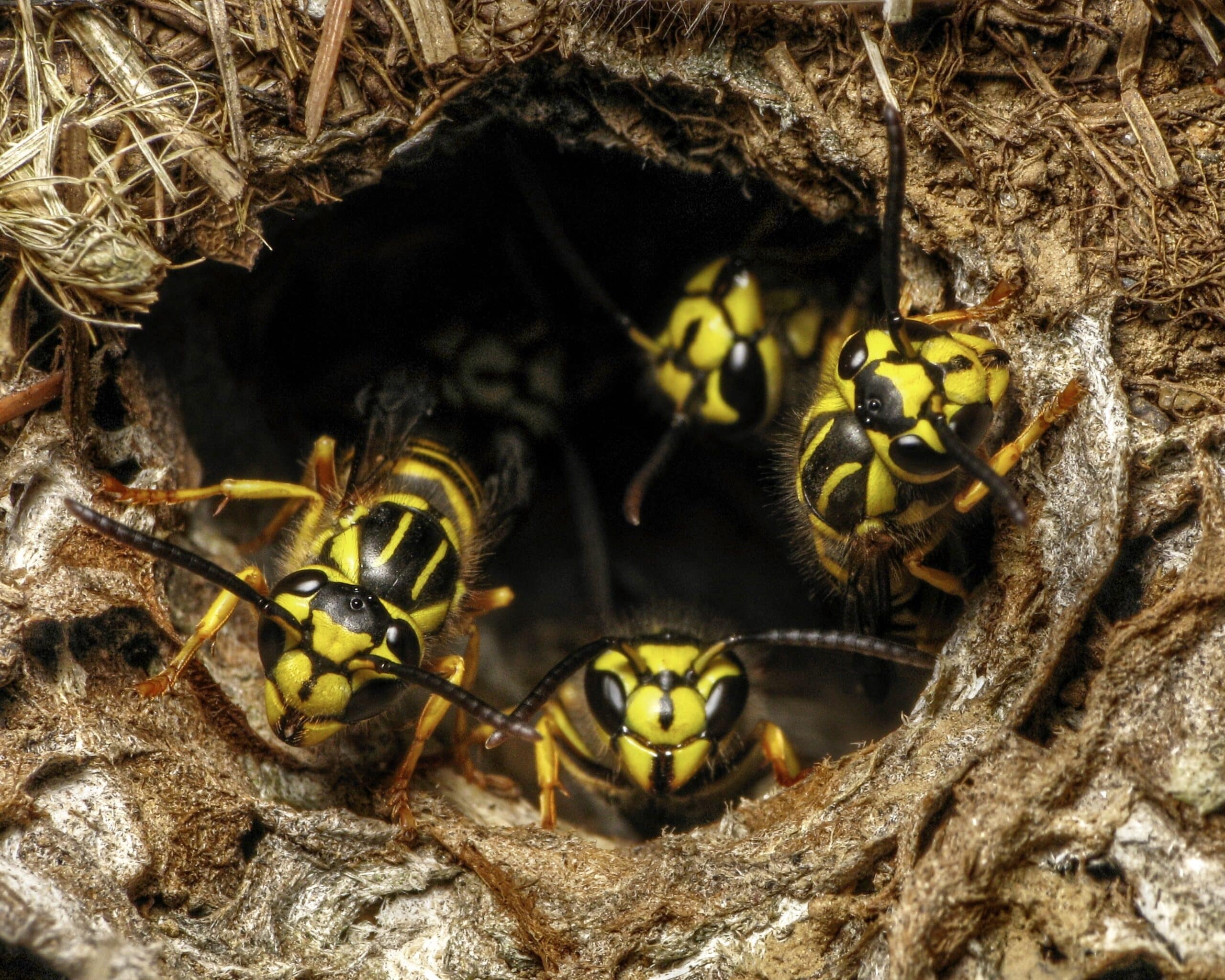
Ground-nesting wasps can be a significant concern for home and business owners in North Carolina and South Carolina, especially during the warmer months when wasp activity is at its highest. While some ground wasps are beneficial pollinators and help control other pest populations, their nests can become a problem when they are located near lawns, gardens, walkways, or other frequently used outdoor spaces.
Two ground-nesting wasps homeowners may encounter are yellow jackets and cicada killers. Although both can establish nests in the ground, their behaviors and potential risks differ significantly. Correctly identifying the species is an important first step in determining whether wasp control is necessary and how to handle the nest.
Why Do Wasps Build Nests in the Ground?
Ground wasps typically begin establishing nests during the spring, with activity continuing through the warmer months. Depending on the species, they may favor areas with sparse vegetation and dry or sandy soil, including unwatered lawns, gardens, flower beds, or areas along landscaping.
A nest located far from your home or frequently unused areas may be left undisturbed, as there are ecological benefits provided by these stinging insects. However, a nest in the middle of a lawn, besides a walkway, near a play area, or somewhere regularly visited by people or pets can present a different situation. Accidentally disturbing a nest while mowing the lawn or doing yard work can provoke defensive behavior, particularly from yellow jackets.
Yellow Jackets vs. Cicada Killers: What's in Your Yard?
Not every ground-nesting wasp behaves the same way. Identifying whether you’re dealing with yellow jackets, cicada killers, or even ground-nesting bees can help determine the appropriate next steps.

Yellow Jackets
The Eastern yellow jacket (Vespula maculifrons) is a common ground-nesting yellow jacket species. Yellow jackets often establish colonies underground and can be highly defensive when their nest is disturbed.
Unlike bees, which can sting only once, yellow jackets can sting multiple times. Workers may act as “guards” around the colony, and any activity near the nest can trigger an aggressive response. An underground nest can be particularly easy to overlook until someone accidentally gets too close.
Yellow jacket activity generally continues from spring into fall, peaking in late summer. If you discover an underground colony in a high-traffic area, professional yellow jacket control may be the safest option. A trained yellow jacket pest control professional can locate the nest and determine an appropriate treatment method without requiring homeowners to approach an active colony themselves.

Cicada Killers
Despite their intimidating size and appearance, cicada killers generally behave very differently from yellow jackets, as they are much less likely to sting, even when significantly annoyed. These wasps dig burrows in the soil and hunt cicadas, which they bring underground as food for their developing young.
When burrows appear in heavily used areas or large numbers of cicada killers become disruptive, professional cicada killer control can help. A cicada killer pest management professional can confirm the species and determine whether treatment is warranted.

What About Ground Bees?
Ground-nesting bees are sometimes mistaken for wasps. Many species are solitary and relatively nonaggressive, creating individual burrows rather than large social colonies.
Because bees can be important pollinators, proper identification is especially important before attempting any treatment. A pest management professional can determine whether the insects in your yard are bees, yellow jackets, cicada killers, or another ground-nesting species.
How to Prevent Ground Wasps from Nesting in Your Yard
Complete prevention of ground wasps can be difficult, but making your property less attractive for nesting may reduce the likelihood of unwanted activity.
Start by maintaining a tidy yard. Keep grass trimmed, remove unnecessary debris, and regularly inspect holes or gaps in lawns and landscaped areas. Maintaining healthy vegetation and appropriately watered soil may also make certain dry, sparsely vegetated areas less appealing to some ground-nesting species.
Food can attract foraging yellow jackets even when their nest isn’t immediately nearby. When eating outdoors, keep food and sweet drinks covered and clean up spills and leftovers promptly.
Some homeowners also plant insect-repellent herbs such as mint or basil around the perimeter of outdoor spaces. A wildlife-friendly landscape is also helpful, as supporting natural predators such as birds and dragonflies will help keep wasps out. These measures shouldn’t be considered substitutes for wasp control when an active colony poses a safety concern, but they can form part of an overall pest prevention strategy.

Should You Treat a Ground Wasp Nest Yourself?
Correct identification should come first. Many solitary ground-nesting bees and cicada killers can be left alone when they are not creating a safety or use conflict. Active yellowjacket nests can produce a rapid defensive response when disturbed.
Avoid approaching, digging into, sealing, or applying home remedies to a suspected yellowjacket nest. If a nest is in a high-traffic area or creates a sting risk, contact a pest management professional to identify the insect and determine an appropriate treatment.”
For an active nest near your home or business in North Carolina or South Carolina, contacting a professional wasp exterminator is generally the safer approach.
When Are Ground Wasps Most Active?
Ground wasps begin establishing nests in the spring and generally remain active throughout the warmer months. Activity can continue into the fall, depending on the species and local weather conditions.
Yellow jacket colonies often become particularly noticeable during late summer, when colony populations are larger, and workers are actively searching for food. This makes early detection important. Addressing a problematic nest earlier in its development may prevent it from becoming a much larger concern later in the season.
Avoid mowing, digging, or performing landscaping work directly around a suspected nest until you know which species is present.
How Long Do Underground Wasp Nests Last?
The lifespan of an underground nest varies for several reasons:
- Species
- Environmental conditions
- Predators
- Food availability
- Human disturbance
Many wasp colonies follow an annual cycle, with the colony declining as colder weather arrives and newly produced queens leave to overwinter elsewhere. Because an inactive-looking hole does not necessarily mean a colony is completely gone, avoid sealing or disturbing a suspected nest until you are confident it is no longer active.

Professional Ground Wasp Control in the Carolinas
When ground-nesting wasps establish themselves too close to your North Carolina or South Carolina home or business, don’t put yourself at unnecessary risk trying to eliminate the colony: call Anticimex Carolinas! We provide professional wasp control, yellow jacket control, and cicada killer control to help homeowners address troublesome nests safely and effectively. Our wasp exterminator teams can identify the species, locate nesting areas, and determine a targeted treatment strategy based on the conditions around your Carolinas property.
Contact Anticimex Carolinas today to schedule professional wasp control for your home or business. Take back your yard and enjoy your outdoor spaces with greater peace of mind, thanks to the pest professionals at Anticimex Carolinas!